1. Elijah: “The keys of this dispensation are committed into your hands.”
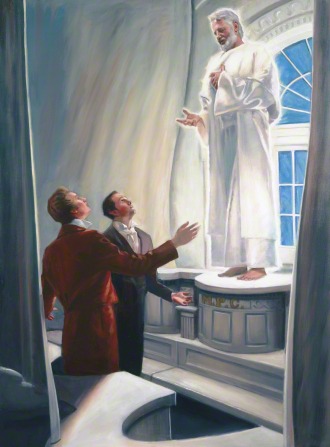
Watch: By the Hand of Elijah the Prophet
Elder Quentin L. Cook testifies of the mission of the prophet Elijah. The salvation of the whole human family is interdependent and interconnected—like the roots and branches of a great tree. (3:32)
‘The doctrine or sealing power of Elijah is as follows:-If you have power to seal on earth and in heaven, then we should be wise. The first thing you do, go and seal on earth your sons and daughters unto yourself, and yourself unto your fathers in eternal glory, and go ahead, and not go back, but use a little wisdom, and seal all you can, and when you get to heaven tell your Father that what you seal on earth should be sealed in heaven, according to his promise. I will walk through the gate of heaven and claim what I seal, and those that follow me and my counsel.’ (Teachings of the Prophet Joseph Smith, 340)
D&C 110:13-16 Elijah
‘Today is April 1. Two days from now, April 3, marks 181 years from the day when Malachi’s prophecy was fulfilled. On that day, Elijah did come, and he gave to Joseph Smith the priesthood power to seal families eternally (see D&C 110:13–16
From that day to this, interest in exploring one’s family history has grown exponentially. At ever-increasing rates, people seem drawn to their ancestry with more than just casual curiosity. Genealogical libraries, associations, and technologies have emerged around the world to support this interest. The internet’s power to enhance communications has enabled families to work together to do family history research with a speed and thoroughness never before possible.
Why is all of this happening? For lack of a better term, we call it the “spirit of Elijah.” We could also equally call it “fulfillment of prophecy.” I bear testimony that Elijah did come. The hearts of the children—of you and me—have turned to our fathers, our ancestors. The affection you feel for your ancestors is part of the fulfillment of that prophecy. It is deeply seated in your sense of who you are. But it has to do with more than just inherited DNA.
For example, as you follow the promptings to learn about your family history, you may discover that a distant relative shares some of your facial features or your interest in books or your talent for singing. This could be very interesting and even insightful. But if your work stops there, you will sense that something is missing. This is because to gather and unite God’s family requires more than just warm feelings. It requires sacred covenants made in connection with priesthood ordinances.
Many of your ancestors did not receive those ordinances. But in the providence of God, you did. And God knew that you would feel drawn to your ancestors in love and that you would have the technology necessary to identify them. He also knew that you would live in a time when access to holy temples, where the ordinances can be performed, would be greater than ever in history. And He knew that He could trust you to accomplish this work in behalf of your ancestors.’ (Henry B Eyring, General Conference, April 2017)
D&C 138:47. What Is Meant by the Phrase “Plant in the Hearts of the Children the Promises Made to Their Fathers”?
President Joseph Fielding Smith identified the “promises made to the fathers” as “the promise of the Lord made through Enoch, Isaiah, and the prophets, to the nations of the earth, that the time should come when the dead should be redeemed. And the turning of the hearts of the children is fulfilled in the performing of the vicarious temple work and in the preparation of their genealogies.” (Doctrines of Salvation, 2:154.)
2. President Wilford Woodruff: “Somebody has got to redeem them.”
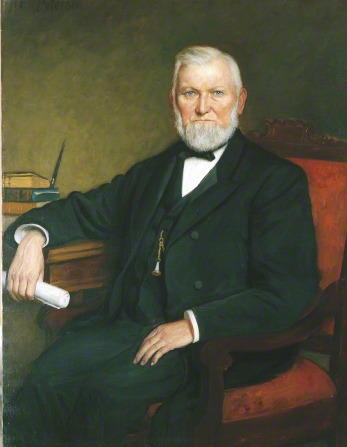
Watch: Ministry of Wilford Woodruff – The Work of the Temple
‘Wilford Woodruff was one of the Church’s most successful missionaries and was also known for his prophetic insights and loyalty to the Church. He kept meticulous journals, which provide much information about the early history of the Church. He was serving as President of the Quorum of the Twelve Apostles when John Taylor died, and almost two years later he was sustained as the President of the Church.
During his administration, the political crusade against the Latter-day Saints intensified, but the Church moved forward. Temples were operating in three Utah towns—St. George, Logan, and Manti—and the Salt Lake Temple was nearing completion. These houses of the Lord enabled thousands of Saints to obtain their endowments and do ordinance work for their kindred dead. President Woodruff had a lifelong interest in temple and family history work. He admonished the Saints on many occasions to perform ordinances in the temple for their ancestors.
The following incident emphasizes the importance of the work the Saints were performing for the dead. In May 1884, Bishop Henry Ballard of the Logan Second Ward was signing temple recommends at his home. Henry’s nine-year-old daughter, who was talking with friends on the sidewalk near her home, saw two elderly men approaching. They called to her, handed her a newspaper, and told her to take it to her father.
The girl did as she was asked. Bishop Ballard saw that the paper, the Newbury Weekly News, published in England, contained the names of more than 60 of his and his father’s acquaintances, along with genealogical information. This newspaper, dated 15 May 1884, had been given to him only three days after it was printed. In a time long before air transportation, when mail took several weeks to get from England to western America, this was a miracle.
The next day, Bishop Ballard took the newspaper to the temple and told the story of its arrival to Marriner W. Merrill, the temple president. President Merrill declared, “Brother Ballard, someone on the other side is anxious for their work to be done and they knew that you would do it if this paper got into your hands.”7 This newspaper is preserved in the Church Historical Library in Salt Lake City, Utah.’ (pages 98-99, Our Heritage)
‘Long before the Latter-day Saints founded a genealogical society, Church members gathered records documenting the lives of their dead ancestors. Wilford Woodruff, Orson Pratt, and Heber J. Grant are among those who obtained the names of thousands of ancestors for whom they performed temple ordinances. In 1894, the First Presidency directed that a genealogical society be organized with Elder Franklin D. Richards as its first leader. A library was established, and representatives of the society went throughout the world in search of names of people for whom temple ordinances could be performed. This society led to the creation of the Family History Department of the Church.
During the April 1894 general conference, President Woodruff announced that he had received a revelation about genealogical work. He declared that God wanted the Latter-day Saints “to trace their genealogies as far as they can, and to be sealed to their fathers and mothers. Have the children sealed to their parents and run this chain through as far as you can get it. … This is the will of the Lord to his people,” he said, “and I think when you come to reflect upon it you will find it to be true.”8 Latter-day Saints are still encouraged to seek out the records of their deceased ancestors and perform temple ordinances in their behalf.
From 1885 to 1900, many Church members served genealogical missions. They were invited to Salt Lake City to receive a blessing for their mission from a General Authority. They were also provided with a missionary card and a letter of appointment. They visited relatives, recorded names from gravestones, and studied parish records and family Bibles, returning to their homes with valuable information that allowed temple work to be performed. Many missionaries reported spiritual experiences that gave them the firm assurance that the Lord was with them and often directed them to a needed source or relative.‘ (page 101, Our Heritage)
Watch: Their Hearts are Bound to You
President Henry B. Eyring poignantly describes why our family are so important to us, not only now but for forever. The Mormon Tabernacle choir punctuates the doctrine in song. (3:15)
Watch: Sharing the Temple Challenge Elder Andersen talks about the many blessings and promises that come from accepting the challenge to find and take a name of one of your own ancestors to the temple. (3:19)
Watch: Your Fingers Have Been Trained
The youth have been prepared to participate in temple and family history work. (1:47)
Watch: Is Anything Too Hard for the Lord?
Elder Neil L. Andersen illustrates the vast work of bringing the ordinances of the gospel to every man, woman, and child who has ever lived on the earth. (3:31)
3. President Joseph F. Smith: “The eyes of my understanding were opened.”
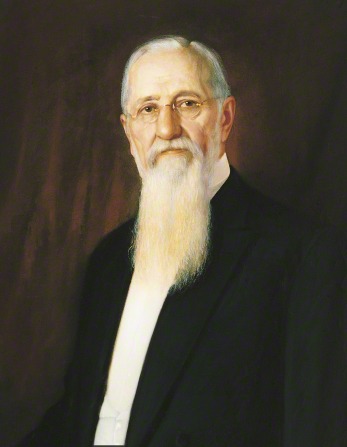
‘Death haunted mankind in 1918. The Great War, known today as World War I, was in the process of claiming more than nine million lives. That staggering figure paled in comparison with the number of people slain in even less time by a global influenza pandemic. Worldwide the virus reaped a grim harvest of perhaps fifty million souls. It killed more than 195,000 Americans in October 1918, the deadliest month in American history, the month the Lord revealed Doctrine and Covenants 138.
The “pervasiveness and ubiquity of death were overwhelming,” yet it is hard to grasp for those of us who live distant from what witnesses themselves could hardly imagine and what cultural historians have described as creating a terrible, gnawing emptiness in tens of thousands of families mourning the losses of loved ones whose bodies were never recovered from the war’s devastation or whose families were wiped out by disease.
In the midst of the dead and dying was Joseph F. Smith, president of the Church. His life’s experiences equipped him to grasp the enormity of death and its implications. His father, Hyrum, had been brutally shot to death when Joseph was five. Not many years later he lost his mother, “the sweetest soul that ever lived,” he wrote, “when I was only a boy.” Death marked his life. His first child, Mercy Josephine, died at age two, leaving Joseph “vacant, lonely, desolate, deserted.” His beloved eldest son died unexpectedly in January 1918, creating what President Smith called “my overwhelming burden of grief.” Between these untimely deaths, President Smith buried a wife and eleven other children. He tasted deeply the bitterness of death.
As general conference neared in October 1918, President Smith himself was less than two months from the end of his own mortality. Unwell, he surprised the Saints by appearing at conference on October 4. He spoke briefly, saying, “I have dwelt in the spirit of prayer, of supplication, of faith and of determination; and I have had my communications with the Spirit of the Lord continuously.” Indeed he had. Just the day before, the Lord had given him the revelation recorded now in Doctrine and Covenants 138. After conference he dictated it to his son Joseph Fielding Smith.’ (Steven C Harper, Making Sense of the Doctrine and Covenants)
Watch: Ministry of Joseph F Smith – A Vision of the Redemption of the Dead
Read: Revelations in Context – Susa Young Gates and the Vision of the Redemption of the Dead
4. President Gordon B. Hinckley: “We are determined … to take the temples to the people.”
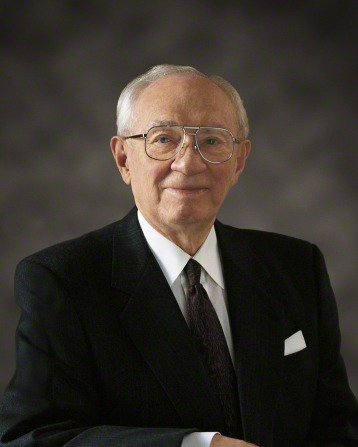
‘Connected with President Hinckley’s optimism and his focus on individuals was his prophetic vision for the future. Most profoundly, that vision concerned temples. The ordinances of the temple, President Hinckley emphasized, are “the crowning blessings the Church has to offer.”18
When he became President of the Church in 1995, there were 47 operating temples worldwide. Under his leadership, the Church more than doubled this number in a little over five years. His vision regarding temples was bold and expansive, but the entire purpose was to bless individuals one by one.
The inspiration for this new era of temple building came in 1997 when President Hinckley went to Colonia Juárez, Mexico, to commemorate the 100th anniversary of a Church-owned school. Afterward, during a long, dusty drive, he was contemplative. “It got quiet,” recalled his secretary, Don H. Staheli. “And then, as I understand it, the revelation started coming. He had thought about smaller temples in the past, but not in the way that he thought about them this time.”19
President Hinckley later described the process: “I began to ask myself what could be done to make it possible for these people to have a temple. … As I meditated on this, the thought came into my mind that … we can build all of the essential elements of a temple into a relatively small building. … I sketched out a plan. … The whole picture came into my mind very clearly. I believe with all my heart that it was inspiration, that it was revelation from the Lord. I came home and talked with my counselors about it, and they approved of it. I then presented it to the Twelve, and they approved of it.”20
Four months later in general conference, President Hinckley made the historic announcement that the Church would begin to build smaller temples in areas where there were not enough members to justify larger ones. “We are determined … to take the temples to the people and afford them every opportunity for the very precious blessings that come of temple worship,” he said.21
In the next general conference, President Hinckley made another historic announcement, saying that plans were going forward to have 100 temples in operation by the end of the year 2000. “We are moving on a scale the like of which we have never seen before,” he stated.22 When he reported on the progress of temple building in April 1999, he used a familiar phrase: “This is a tremendous undertaking, with many problems, but no matter the difficulty, things work out and I am confident we will reach our goal.”23
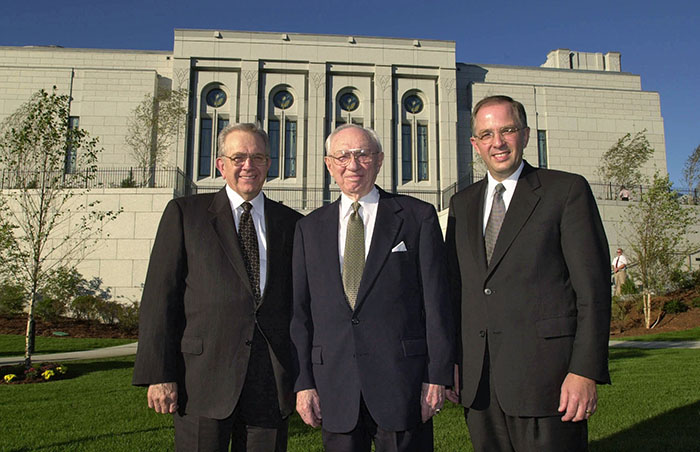
In October 2000, President Hinckley traveled to Boston, Massachusetts, USA, to dedicate the Church’s 100th temple—one of 21 he dedicated that year on four continents. By the end of his life, 124 temples were completed and another 13 were announced or under construction.’ (Andrew D Olsen, Gordon B Hinckley, A prophet of Optimism and Vision, Ensign January 2017)
 Latter-day Bloke