From the Life of Gordon B. Hinckley
From the manual:
President Hinckley’s concern for new converts and less-active members was a result of his experience in seeing how the gospel blesses lives. A news reporter once asked him, “What brings you the greatest satisfaction as you see the work of the Church today?” President Hinckley replied:
“The most satisfying experience I have is to see what this gospel does for people. It gives them a new outlook on life. It gives them a perspective that they have never felt before. It raises their sights to things noble and divine. Something happens to them that is miraculous to behold. They look to Christ and come alive.”
How has the gospel given you a new outlook on life?
1. We have a great responsibility to minister to the individual.
“It is a time-honored adage that love begets love. Let us pour forth love-show forth everlasting increase; cast our bread upon the waters and we shall receive it after many days, increased to a hundredfold. Friendship is like Brother Turley in his blacksmith shop welding iron to iron; it unites the human family with its happy influence.” (Teachings of the Prophet Joseph Smith, 316).
From the manual:
We are becoming a great global society. But our interest and concern must always be with the individual. Every member of this church is an individual man or woman, boy or girl. Our great responsibility is to see that each is “remembered and nourished by the good word of God” (Moro. 6:4), that each has opportunity for growth and expression and training in the work and ways of the Lord, that none lacks the necessities of life, that the needs of the poor are met, that each member shall have encouragement, training, and opportunity to move forward on the road of immortality and eternal life.
Why must “our interest and concern … always be with the individual,” even in a worldwide church?
2. Every convert is precious and is a great and serious responsibility.
‘So, my brothers, it is your duty to reach out to anyone who appears at the doors of your Church buildings. Welcome them with gratitude and without prejudice. If people you do not know walk into one of your meetings, greet them warmly and invite them to sit with you. Please make the first move to help them feel welcome and loved, rather than waiting for them to come to you.
After your initial welcome, consider ways you can continue to minister to them. I once heard of a ward where, after the baptism of two deaf sisters, two marvelous Relief Society sisters decided to learn sign language so they could better communicate with these new converts. What a wonderful example of love for fellow brothers and sisters in the gospel!’ (Gerard Caussee, General Conference, October 2013)
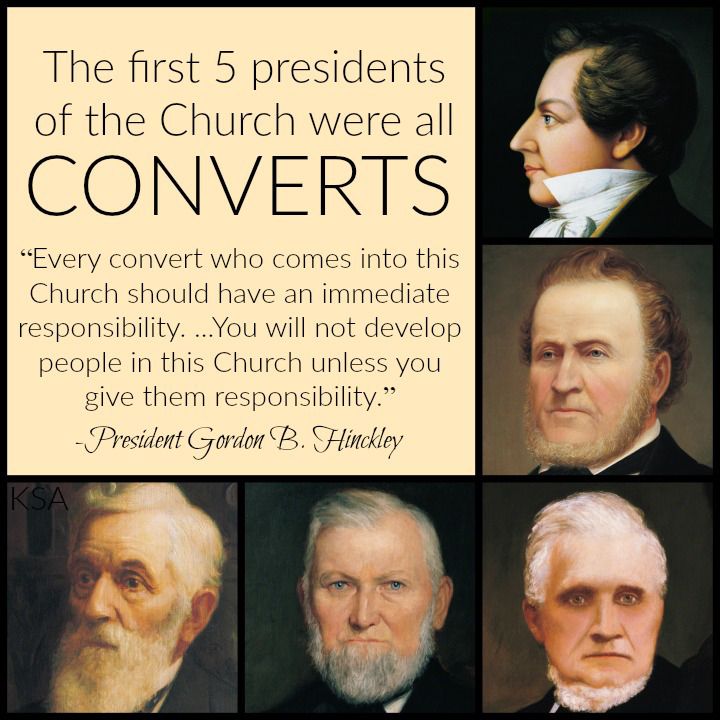
“In building the kingdom of God, every positive act, every friendly greeting, every warm smile, every thoughtful, kind note contributes to the strength of the whole. It is my prayer that we may be open and outgoing, friendly, and helpful to all who come among us. But let us give special care and concern for the new converts to the Church. When we detect a halting step or a stumble as they begin their journey on the gospel path, let us be there to lift and support with words of kindness and concern; let us be available to give gentle, loving counsel that will strengthen and sustain. Let us conscientiously look for occasions to show that love which the Savior admonished us to have when He said, ‘A new commandment I give unto you, That ye love one another’ (John 13:34).” (Carl B Pratt, “Care for New Converts,” Ensign, Nov. 1997, 12)
What can we learn and apply from the letter that President Hinckley shares in section 2?
3. Every convert needs friendship, a responsibility, and nurturing with the word of God.
‘Deep down we know that what matters in this life is more than winning for ourselves. What matters is helping others win, even if it means slowing down and changing our course. Life teaches us that we can achieve happiness when we seek the happiness and well-being of others.’ (Elaine S Dalton)
“A faithful friend is a strong defense. And he that hath found . . . one hath found a treasure” (Ecclesiasticus 6:14).

From the manual:
With the ever-increasing number of converts, we must make an increasingly substantial effort to assist them as they find their way. Every one of them needs three things: a friend, a responsibility, and nurturing with “the good word of God” (Moro. 6:4). It is our duty and opportunity to provide these things.
What are some ways we can befriend new converts?
4. There is everything to gain and nothing to lose by coming back to Church activity.
Watch: A Yearning for Home – President Uchtdorf, General Conference October 2017
‘Experiences of activators suggest that there are eight key factors in helping less-active Latter-day Saints participate fully in gospel ordinances and opportunities.
- Positive experiences with active Church members are vital. Through friendship, negative feelings toward the Church and other members can be resolved.
- People are most likely to respond to those they trust. Activated members say they strongly identify with activators who are willing to make sacrifices for them and accept them rather than judge them. It is important for the less-active to sense that an activator’s efforts are genuine and not merely the fulfillment of duty.
- The three most important attributes of a successful activator are disclosure, warmth, and commitment. Disclosure means that the activator is willing to discuss his or her own life and experiences. Warmth connotes a friendly, trusting attitude. Commitment means consistency in visiting and willingness to fulfill promises.
- Successful activators feel a moral responsibility for the people they activate. They care about others’ spiritual lives.
- Activators need to be involved in the four distinct processes of reactivation: (1) Diagnosis—helping determine why an individual is not participating more fully in the Church; (2) Problem resolution—helping the less-active person learn to overcome problems through obedience to gospel principles; (3) Social integration—helping the person become accepted and involved in the community of Latter-day Saints; (4) Forgiveness and self-acceptance—helping less-active members sense that the Lord accepts them and forgives them of their mistakes. Bishops often must be involved in this part of the process.
- Activators play a key role in helping less-active members interpret their own experiences and challenges in terms of the gospel.
- Activation involves reintroduction to spiritual things with which less-active members may have had limited experience. These members need to be placed in situations where they can feel the Spirit of the Lord and understand how it can lead them to truth.
- Building people’s confidence in their own ability to change and become righteous is an important part of activation. (Don L Searle, Ensign Feb 1990)
From the manual:
My beloved brethren and sisters who may … have drifted, the Church needs you, and you need the Church. You will find many ears that will listen with understanding. There will be many hands to help you find your way back. There will be hearts to warm your own. There will be tears, not of bitterness but of rejoicing
How can we help people return?
5. For Latter-day Saints who return to Church activity, it will feel good to be home again.

What do you learn from the account that President Hinckley shares in section 5?
Watch: The Faith of Youth- The Ennis Family
The Ennis family had become less active, but they responded when ward members reached out in love. (3:35)
 Latter-day Bloke