1. Isaiah describes the condition of the world in the last days.
‘Isaiah ministered during the reign of several kings of Judah: Uzziah, Jotham, Ahaz and Hezekiah (See Isaiah 1:1) – a period marked by the intense struggles of the people to return to a state of greater obedience before the Lord.’ (Richard J Allen, Study Commentary of the Old Testament)
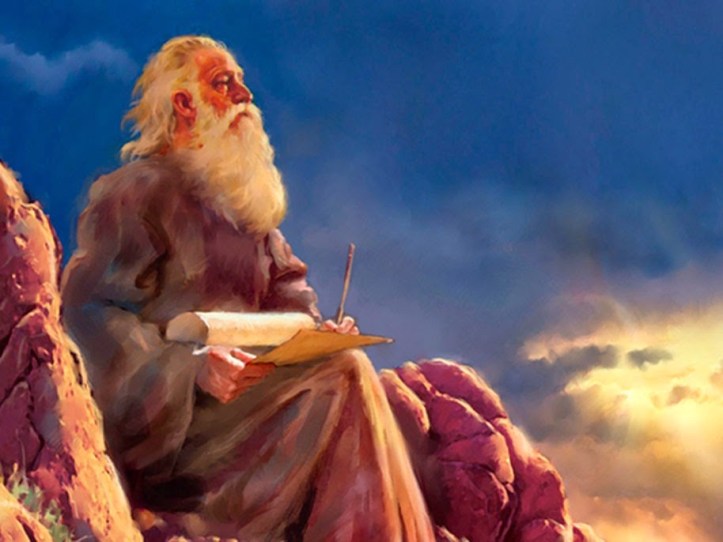
Isaiah 1:1–9. Rebellion against the Lord
‘“Israel’s rebellion is evidence of the highest degree of sin” (Sidney B. Sperry, The Spirit of the Old Testament,p. 175). Jehovah had nourished and brought them up as children (in Egypt and the wilderness), and now in their adulthood (in the promised land) they had turned against the Lord. Their affliction is like wounds or sores that have not healed. The totality of their rebellion is illustrated by the references to head and heart, to the whole person from foot to head. In other words, the spiritual cancer had infested the whole body of Israel. Little spiritual health was left in the nation. That was why the land would be left utterly desolate.’ (Institute Old Testament Manual)
Isaiah 1:10-15 Religious ceremonies without meaning or faith
‘Judea was desolate, and their cities burned. This awakened them to bring sacrifices and offerings, as if they would bribe God to remove the punishment, and give them leave to go on in their sin. Many who will readily part with their sacrifices, will not be persuaded to part with their sins. They relied on the mere form as a service deserving a reward. The most costly devotions of wicked people, without thorough reformation of heart and life, cannot be acceptable to God. He not only did not accept them, but he abhorred them. All this shows that sin is very hateful to God. If we allow ourselves in secret sin, or forbidden indulgences; if we reject the salvation of Christ, our very prayers will become abomination.’ (Matthew Henry’s Concise Commentary)
Isaiah 2:6–22. The Proud and the Wicked to Be Brought Low
‘Isaiah 2 summarizes the basic spiritual problems that troubled Israel in Isaiah’s day and that will prevail again among the people before the Second Coming. This passage is another excellent example of dualistic prophecy (see Enrichment E for a discussion of prophetic dualism). Though Isaiah’s prophecy was given “concerning Judah and Jerusalem” (v. 1), it is obviously also related to the last days and the Second Coming of Jesus.
Verse 6. They were “replenished from the east,” or in other words, they looked to the religious philosophies and the gods of the Assyrians and other heathen countries for power and sustenance. Today people look to many other religions and philosophies of men for wisdom and guidance instead of to the gospel.
Verse 6. They “hearken unto soothsayers” (2 Nephi 12:6), those false prophets who claimed to be able to foretell the future. Today, true prophets are largely ignored, and all kinds of false religionists and counselors are looked to for guidance.
Verse 6. “They please themselves in the children of strangers” or, as C. F. Keil and F. Delitzsch translated the phrase, “and with the children of foreigners they go hand in hand” (Commentary on the Old Testament,7:1:118). In short, ancient Israel was joining the heathen nations in all their wickedness, and modern society is joining with the influences of the world rather than looking to the Lord.
Verse 7. The land was “full of silver and gold,” that is, the people were wealthy and materialistic. Their hearts were set on the things of the world. Again in the last days, materialism runs rampant.
Verse 7. The land was “full of horses, neither is there any end of their chariots.” The horse was a symbol of warfare, as was the chariot. Today is an age characterized by “wars and rumors of war” (see JS—M 1:28.)
Verse 8. The land was filled with idolatry then, and people still turn to false gods today, though not necessarily to idols made of wood or stone.
Verse 9. The “mean man boweth not down, and the great man humbleth himself not” (2 Nephi 12:9; emphasis added). The differences in the Book of Mormon account of Isaiah’s writings, noted by the italics, show that Isaiah was not making further reference to idolatry but was referring to the fact that men would not worship the true God. In the preface to the Doctrine and Covenants, the Lord indicated this failure would be a major concern of the last days. (see D&C 1:16.)
Because of her sins, ancient Israel brought upon herself the judgments of God, and because of the same problems the people of the last days will likewise bring sorrow and problems upon themselves.
The brass plates contained other differences that clarify Isaiah’s meaning. Compare Isaiah 2:10, 12–14, 16, 19, 21with 2 Nephi 12:10, 12–14, 16, 19, 21.’ (Institute Old Testament Manual)
2. Isaiah counsels the faithful to stand in holy places.
Isaiah 4:5-6 A place of refuge
‘The possibilities for us to lend a hand and be a friend are endless. You might help resettled refugees learn their host country language, update their work skills, or practice job interviewing. You could offer to mentor a family or a single mother as they transition to an unfamiliar culture, even with something as simple as accompanying them to the grocery store or the school. Some wards and stakes have existing trusted organizations to partner with. And, according to your circumstances, you can give to the Church’s extraordinary humanitarian effort.
Additionally, each one of us can increase our awareness of the world events that drive these families from their homes. We must take a stand against intolerance and advocate respect and understanding across cultures and traditions. Meeting refugee families and hearing their stories with your own ears, and not from a screen or newspaper, will change you. Real friendships will develop and will foster compassion and successful integration.
The Lord has instructed us that the stakes of Zion are to be “a defense” and “a refuge from the storm.” Doctrine and Covenants 115:6 see also Isaiah 4:5–6 We have found refuge. Let us come out from our safe places and share with them, from our abundance, hope for a brighter future, faith in God and in our fellowman, and love that sees beyond cultural and ideological differences to the glorious truth that we are all children of our Heavenly Father.’ (Patrick Kearon, General Conference, April 2016)
Isaiah 2:2-3 The mountain of the Lord’s house
‘The Prophet Joseph said the main object of the gathering of the Jews, or the people of God in any age of the world “was to build unto the Lord a house whereby He could reveal unto His people the ordinances of His house and the glories of His kingdom, and teach the people the way of salvation.” (Teachings of the Prophet Joseph Smith, pp. 307–8.)
Bible prophecies indicate that in the last dispensation of the gospel, there would be a restoration of all of the principles and practices of former dispensations, which includes temple-building and the performing of ordinances therein. (See Isa. 2:2–3 Micah 4:1–2 Acts 3:19–21 Eph. 1:9–10
A latter-day Apostle wrote: “The history of Temples teaches us that the people of God have been strong, or weak, in proportion to the faithfulness with which they have attended to their sanctuaries.” (Hyrum M. Smith and Janne M. Sjodahl, Doctrine and Covenants Commentary, Salt Lake City: Deseret Book Co., 1951, p. 612.)’ (David B Haight, General Conference, October 1990)

3. Isaiah describes the gathering of Israel in the latter days.
Isaiah 5:26–30. “He Will Lift Up an Ensign to the Nations” in the Latter Days
“Since there were neither trains nor airplanes in that day, Isaiah could hardly have mentioned them by name. However, he seems to have described them in unmistakable words. How better could ‘their horses’ hoofs be counted like flint, and their wheels like a whirlwind’ than in the modern train? How better could ‘their roaring … be like a lion’ than in the roar of the airplane? Trains and airplanes do not stop for night. Therefore, was not Isaiah justified in saying: ‘none shall slumber nor sleep; neither shall the girdle of their loins be loosed, nor the latchet of their shoes be broken’? With this manner of transportation the Lord can really ‘hiss unto them from the end of the earth,’ that ‘they shall come with speed swiftly.’” (LeGrand Richards, Israel! Do You Know?,p. 182.)
4. Isaiah responded willingly to his call to be a prophet.
Isaiah 6:2 What are seraphim?
‘Seraphs are angels who reside in the presence of God, giving continual glory, honor, and adoration to him. “Praise ye him, all his angels: praise ye him, all his hosts.” (Ps. 148:2.) It is clear that seraphs include the unembodied spirits of pre-existence, for our Lord “looked upon the wide expanse of eternity, and all the seraphic hosts of heaven, before the world was made.” (D. & C. 38:1.) Whether the name seraphs also applies to perfected and resurrected angels is not clear. While petitioning on behalf of the saints, the Prophet prayed that “we may mingle our voices with those bright, shining seraphs around thy throne, with acclamations of praise, singing Hosanna to God and the Lamb!” (D. & C. 109:79.)
In Hebrew the plural of seraph is seraphim or, as incorrectly recorded in the King James Version of the Bible, seraphims. Isaiah saw seraphim in vision and heard them cry one to another, “Holy, holy, holy, is the Lord of hosts; the whole earth is full of his glory.” (Inspired Version, Isa. 6:1-8.) The fact that these holy beings were shown to him as having wings was simply to symbolize their ‘power, to move, to act, etc.’ as was the case also in visions others had received. (D. & C. 77:4.)’ (Bruce R McConkie, Mormon Doctrine, pp. 702-3)
Isaiah 6:5 Then said I, Woe is me.
‘The cry of the prophet expresses the normal result of man’s consciousness of contact with God. So Moses “hid his face, for he was afraid to look upon God” (Exodus 3:6). So Job “abhorred himself and repented in dust and ashes” (Job 42:6). So Peter fell down at his Lord’s feet, and cried, “Depart from me, for I am a sinful man, O Lord” (Luke 5:8). Man at such a time feels his nothingness in the presence of the Eternal, his guilt in the presence of the All-holy. No man can see God and live. (Comp. also 1Samuel 6:20.)’ (Ellicott’s Commentary for English Readers)
Isaiah 6:5–8. The Prophet Received Forgiveness
‘The expression “Woe is me! For I am undone” is an idiom declaring Isaiah’s overwhelming feeling of unworthiness before God. (See Young, Book of Isaiah,1:247–48). Likewise, the purging by a live coal is symbolic of purifying, cleansing, and forgiveness (see Young, Book of Isaiah, 1:250–51). Joseph Smith had similar experiences in connection with his call and the carrying forth of his ministry (see JS—H 1:29; D&C 29:3; 36:1; 50:36; 60:7).’ (Old Testament Institute Manual)
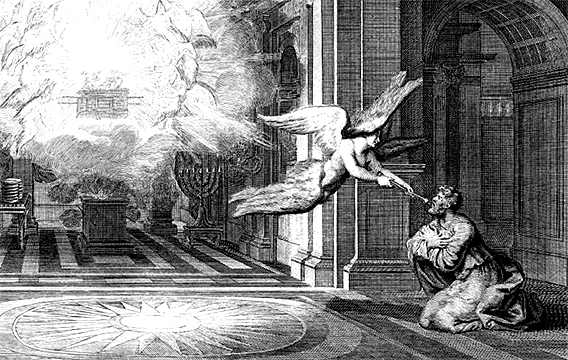
Isaiah 6:8 Whom shall I send?
“In many ways, Isaiah and Jesus faced comparable and extremely difficult teaching situations. Isaiah was the last great prophet to address assembled Israel. During his ministry, the Ten Tribes were taken captive; they later fled to the north and became lost. His words went with these Israelites, and later with Lehi and his people. Of course, Isaiah’s messages also remained with the Jews in Jerusalem. Furthermore, since so many of Isaiah’s prophecies deal with the last days, his words are of particular value to those of covenant Israel who now read his book. Given this wide time period and recognizing the wide range of spiritual attitudes that the readers of his work would have, Isaiah was challenged to find the means to teach such a diversified audience.
Jesus faced a similar challenge during his earthly ministry. He needed to impart special knowledge to his ‘elect’ apostles and disciples, while at the same time teaching the multitudes. Among the crowds were people of varying degrees of spirituality, some seeking the truth, others trying to entrap Jesus, and many simply satisfying their curiosity. Also, Jesus knew that his words would inspire countless generations of readers in varying cultures, languages, and spiritual conditions. Therefore, he spoke in parables so that the listener or reader would understand according to his individual level of spiritual sensitivity.” (Isaiah: Prophet, Seer, and Poet, by Victor L. Ludlow, pp. 133-4)
 Latter-day Bloke