
A testimony is a declaration of truth based on personal knowledge or belief.
To be converted means to be changed. Think about how water can be converted or changed so that it can be used for different purposes. (For example, water can be converted to ice or steam.) Ponder the kinds of changes that conversion to the gospel brings.
“True conversion is more than merely having a knowledge of gospel principles and implies even more than just having a testimony of those principles. It is possible to have a testimony of the gospel without living it. Being truly converted means we are acting upon what we believe and allowing it to create ‘a mighty change in us, or in our hearts’ [Mosiah 5:2]. …
“… Conversion takes place as we are diligent about saying our prayers, studying our scriptures, attending church, and being worthy to participate in temple ordinances. Conversion comes as we act upon the righteous principles we learn in our homes and in the classroom. Conversion comes as we live pure and virtuous lives and enjoy the companionship of the Holy Ghost. Conversion comes as we understand the Atonement of Jesus Christ, acknowledge Him as our Savior and Redeemer, and allow the Atonement to take effect in our lives” (Bonnie L Oscarson, “Be Ye Converted,” Ensign or Liahona, Nov. 2013, 76–78).
See Elder M Russell Ballard – Pure Testimony
We have a responsibility to minister to others.
‘During his defense, Paul recounted his vision of the Savior on the road to Damascus. The book of Acts contains several accounts of Paul’s vision, and each account differs to some degree (see Acts 9:3–20; 22:4–21; 26:9–19; see also Galatians 1:15–16). For example, the description of the “light” is different in each account (see Acts 9:3; Acts 22:6; Acts 26:13); only Acts 9:17 indicates that Ananias restored Paul’s sight by the laying on of hands; and the account in Acts 26 provides less detail about what Paul’s companions experienced.
Furthermore, in the account Paul gave to Agrippa, Paul blended the words of three different revelations as though they were one: the words the Lord spoke to Paul on the road to Damascus (compare Acts 26:14–16 with Acts 9:4–6; 22:7–10); the words Ananias later spoke to Paul (compare Acts 26:16 with Acts 22:15); and the words the Lord spoke to Paul still later in a vision at Jerusalem (compare Acts 26:17 with Acts 22:21). These variations are likely due to the different audiences and purposes of each account.
Some critics have found fault with the Prophet Joseph Smith because there are variations in the several recorded accounts of his First Vision. However, as with Paul, these variations do not discredit the essential truth that the Prophet saw a vision of Heavenly Father and the Savior.’ (Institute New Testament Manual)
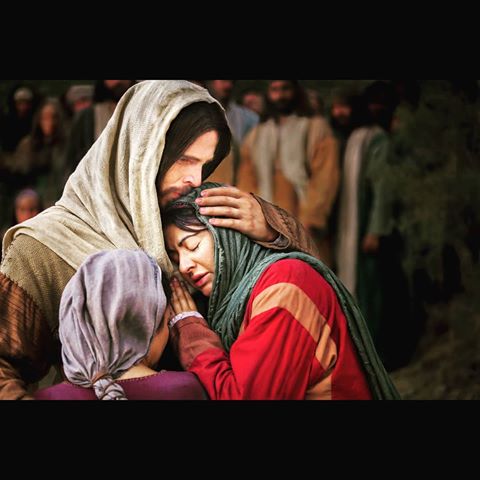
The Bible often uses the Greek word di·aʹko·nos for “minister.” The Encyclopedia of Religion explains that this word represents “not status but the serving relationship of the minister to the one served: following the example of Christ . . . is at the heart of the Christian understanding of ministry.”
In harmony with this definition of ministering, the Saviour spent his ministry giving of himself according to the needs of others.
‘In our discipleship, we have many demands, concerns, and assignments. However, some activities must always be at the heart of our Church membership. “Wherefore,” the Lord commands, “be faithful; stand in the office which I have appointed unto you; succor the weak, lift up the hands which hang down, and strengthen the feeble knees.” Doctrine and Covenants 81:5 emphasis added.]
This is the Church in action! This is pure religion! This is the gospel in its true sense as we succor, lift, and strengthen those in spiritual and temporal need! Doing so requires us to visit them and to assist them, [See James 1:27] that their testimonies of faith in Heavenly Father and Jesus Christ and His Atonement will be anchored in their hearts.’ (Russell M Ballard, General Conference, April 2018)
“We are surrounded by those in need of our attention, our encouragement, our support, our comfort, our kindness. … We are the Lord’s hands here upon the earth, with the mandate to serve and to lift His children. He is dependent upon each of us.” (Thomas S Monson, “What Have I Done for Someone Today?” Ensign, Nov. 2009, 86.
If we heed the Lord’s prophets, He will guide us and protect us from evil.
“Every time in my life when I have chosen to delay following inspired counsel or decided that I was an exception, I came to know that I had put myself in harm’s way. Every time that I have listened to the counsel of prophets, felt it confirmed in prayer, and then followed it, I have found that I moved toward safety. Along the path, I have found that the way had been prepared for me and the rough places made smooth. God led me to safety along a path which was prepared with loving care, sometimes prepared long before” (Henry B Eyring, “Finding Safety in Counsel,” Ensign, May 1997, 25).
‘Rejecting the Counsel of Apostles
Acts 27:11–12 illustrates several reasons why individuals sometimes choose to reject the counsel of Apostles or other Church leaders. (1) Worldly experience and training. Just as “the centurion believed the master and the owner of the ship” (Acts 27:11) rather than the counsel of Paul, a tentmaker, people today sometimes reject the words of seers or other Church leaders because their counsel does not coincide with the opinions of “experts” in the world. (2) Convenience. The ship’s crew contended that they should continue their journey because “the haven was not commodious to winter in” (Acts 27:12), meaning it was not a convenient location to spend the winter months. Likewise, adhering to the counsel of Church leaders is not always convenient. (3) Majority mentality. “The more part” of the passengers advised the centurion “to depart” (Acts 27:12). For many individuals, it makes more sense to agree with the majority than to agree with a servant of God, whose words are not meant to be popular.
President Ezra Taft Benson taught the following regarding prophetic teachings:
“The prophet is not required to have any particular earthly training or credentials to speak on any subject or act on any matter at any time.
“Sometimes there are those who feel their earthly knowledge on a certain subject is superior to the heavenly knowledge which God gives to His prophet on the same subject. They feel the prophet must have the same earthly credentials or training which they have had before they will accept anything the prophet has to say that might contradict their earthly schooling. …
“… The prophet tells us what we need to know, not always what we want to know. …
“How we respond to the words of a living prophet when he tells us what we need to know, but would rather not hear, is a test of our faithfulness. …
“… The prophet can receive revelation on any matter—temporal or spiritual” (“Fourteen Fundamentals in Following the Prophet,” in Brigham Young University 1980 Speeches [1981], 3–4; speeches.byu.edu).’ (Institute New Testament Manual)
 Latter-day Bloke