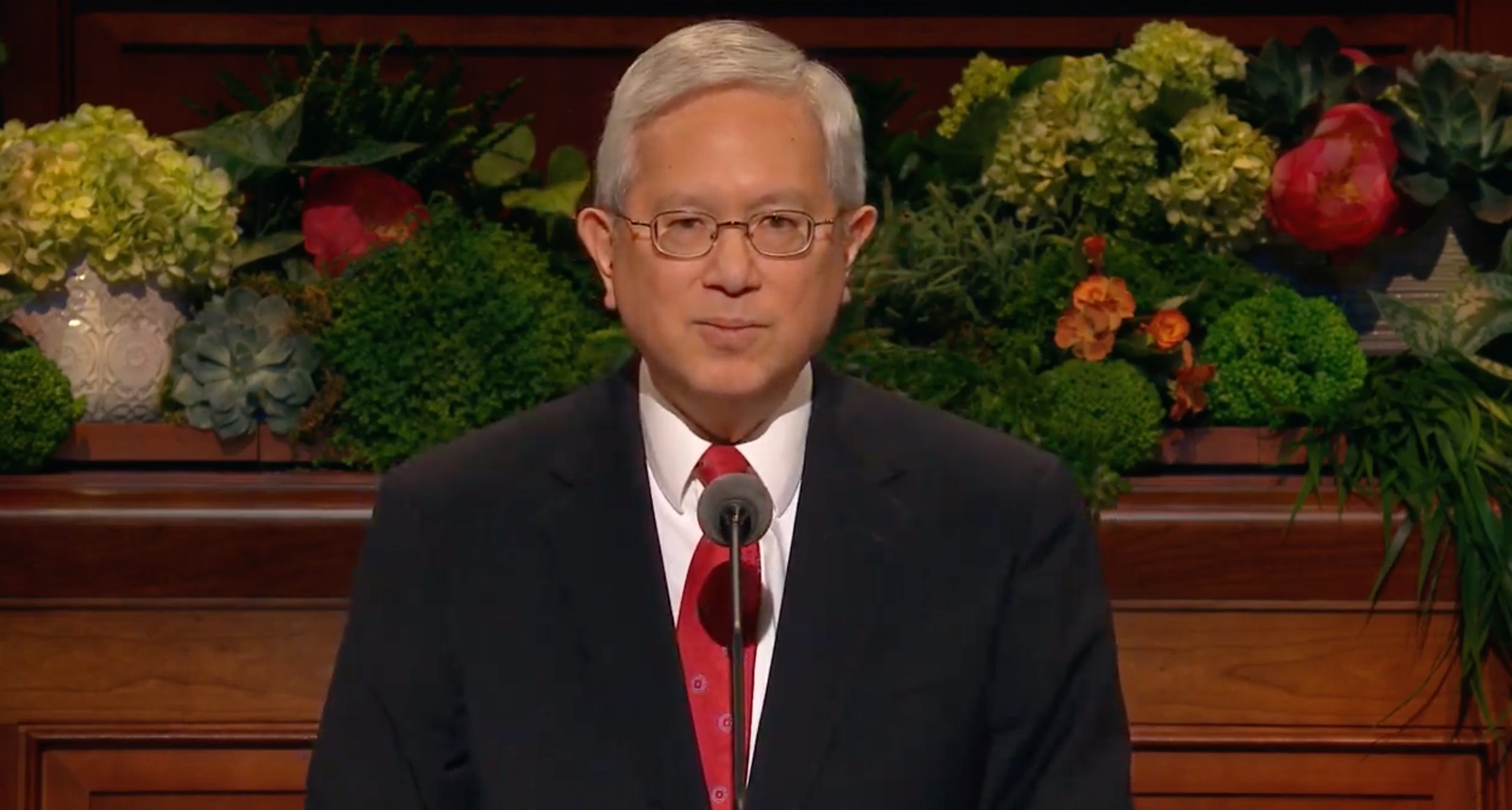
As our Good Shepherd, Jesus Christ calls us in His voice and His name. He seeks and gathers us. He teaches us how to minister in love. Let us consider these three themes, beginning with Him calling us in His voice and His name.
First, our Good Shepherd “calleth his own sheep by name. … They know his voice.” And “in his own name he doth call you, which is the name of Christ.” As we seek with real intent to follow Jesus Christ, inspiration comes to do good, to love God, and to serve Him. As we study, ponder, and pray; as we regularly renew sacramental and temple covenants; and as we invite all to come to His gospel and ordinances, we are hearkening to His voice.
Amidst all of the babble and noise of modern life, how can we know and hear the Saviour’s voice?
Second, our Good Shepherd seeks and gathers us into His one fold. He asks, “What man of you, having an hundred sheep, if he lose one of them, doth not leave the ninety and nine in the wilderness, and go after that which is lost, until he find it?”
The Savior’s mortal ministry was indeed characterized by love, compassion, and empathy. He did not disdainfully walk the dusty roads of Galilee and Judea, flinching at the sight of sinners. He did not dodge them in abject horror. No, He ate with them. [See Luke 15:1–2] He helped and blessed, lifted and edified, and replaced fear and despair with hope and joy. Like the true shepherd He is, He seeks us and finds us to offer relief and hope. [See Matthew 18:11] Understanding His compassion and love helps us exercise faith in Him—to repent and be healed. (Dale G Renlund, General Conference, April 2017)
The Good Shepherd leaves the ninety-nine immediately to go after the one who is lost. This sheep may have wandered away from the shepherd, but it was still precious to Him.
- Notice the shepherd doesn’t give up until the sheep is found — He goes after the sheep “until he finds it”.
- Notice the shepherd isn’t angry at the sheep — He is joyful when he finds his sheep.
Notice the shepherd carries the all the weight — The sheep is carried “on his shoulders”.
The shepherd did not stop until his mission had been completed and the sheep had been found! Jesus did not stop on His quest until He was able to cry, ‘It is finished’.
This shepherd was able to rejoice with his friends and neighbours because his lost sheep was found. He was overjoyed with the rescue of this one, lost sheep. Jesus makes it clear that heaven gets excited about the salvation of just ONE lost soul.
How can we develop the same love for his sheep that the Saviour has?
Third, as the “Shepherd of Israel,” Jesus Christ exemplifies how shepherds in Israel minister in love. When our Lord asks if we love Him, as He did with Simon Peter, our Savior implores: “Feed my lambs. … Feed my sheep. … Feed my sheep.” The Lord promises that when His shepherds feed His lambs and sheep, those in His fold “shall fear no more, nor be dismayed, neither shall they be lacking.”
‘Real shepherds… care for, feed, and watch over the flock constantly… There is no human condition in which the unconditional love of a true shepherd is wasted.’ (Neal A Maxwell, “Unto the Rising Generation,” Ensign, Apr. 1985, 10)
What examples can you think of from the Saviour’s ministry that exemplify the principles of ministering?
As Lamb of God, our Savior knows when we feel alone, diminished, uncertain, or afraid. In vision, Nephi saw the power of the Lamb of God “[descend] upon the saints of the church of the Lamb, and upon the covenant people of the Lord.” Though “scattered upon all the face of the earth … they were armed with righteousness and with the power of God in great glory.”
‘ Every one of us, and our families, can be armed with the power of God as a defense if we will but remain true to The Church of Jesus Christ of Latter-day Saints and let the Spirit be our guide. Trials may come, and we may not understand everything that happens to us or around us. But if we humbly, quietly trust in the Lord, He will give us strength and guidance in every challenge we face. When our only desire is to please Him, we will be blessed with a deep inner peace. ‘ (Bruce D Porter, General Conference, April 2013)
How do our covenants arm us with power and righteousness?
(Passages in italics are excerpts from Elder Gong’s address.)
 Latter-day Bloke