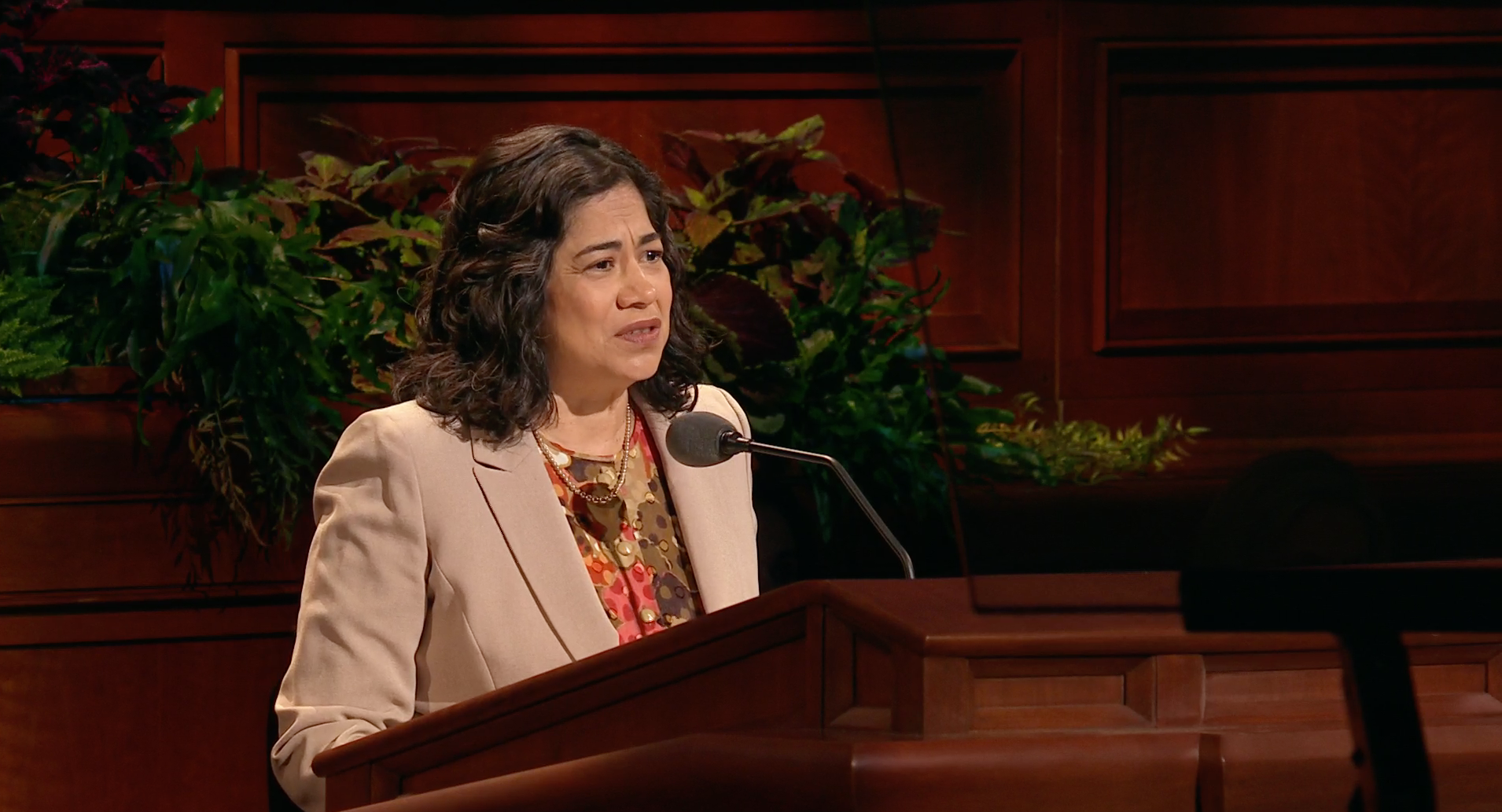
Sister Aburto began her talk by describing a plane trip in which the plane went from bright sunshine into dark clouds.
‘Black clouds may also form in our lives, which can blind us to God’s light and even cause us to question if that light exists for us anymore. Some of those clouds are of depression, anxiety, and other forms of mental and emotional affliction. They can distort the way we perceive ourselves, others, and even God. They affect women and men of all ages in all corners of the world. ‘
What do we mean by depression?
Watch: Black Dog video This short animation, produced by the World Health Organisation, helps explain depression through the metaphor of the ‘Black Dog’ – an expression used by Sir Winston Churchill, who suffered from depression himself.
See Elder Holland: Like a Broken Vessel
Some symptoms of depression:
Thoughts
Poor Concentration
Memory not good
The way we think about ourselves, others and the world
Negative thoughts
Whipping ourselves
Feelings
‘without pleasure’
Increase in negative emotions, tearful, low, sad, angry and irritable sometimes due to lack of sleep
Feelings of hopelessness, of being in a dark place
Behaviours
Low motivation
Withdrawn, avoidance of people and events and things
Struggling to relax
Lack of confidence
Physical
Any mental state is associated with physical changes
Flat, no energy, poor sleep or no sleep, weight gain or loss, physical feelings of being low, sick, upset, anxiety be difficult to be around
‘When our minds are suffering, it is appropriate to seek help from God, from those around us, and from medical and mental health professionals. ‘
Why is it that we do not always seek professional help for mental health problems as readily as we would for physical health problems?
‘My dear friends, it can happen to any of us—especially when, as believers in the plan of happiness, we place unnecessary burdens on ourselves by thinking we need to be perfect now. Such thoughts can be overwhelming. Achieving perfection is a process that will take place throughout our mortal life and beyond—and only through the grace of Jesus Christ.‘
How do we sometimes place unnecessary burdens on ourselves?
As disciples of Jesus Christ, we have made a covenant with God that we “are willing to bear one another’s burdens” and “to mourn with those that mourn.” This may include becoming informed about emotional illnesses, finding resources that can help address these struggles, and ultimately bringing ourselves and others to Christ, who is the Master Healer.12 Even if we do not know how to relate to what others are going through, validating that their pain is real can be an important first step in finding understanding and healing.
How can we help ourselves or others who are facing these challenges?
‘So how do you best respond when mental or emotional challenges confront you or those you love? Above all, never lose faith in your Father in Heaven, who loves you more than you can comprehend. As President Monson said to the Relief Society sisters so movingly last Saturday evening: “That love never changes. … It is there for you when you are sad or happy, discouraged or hopeful. God’s love is there for you whether or not you feel you deserve [it]. It is simply always there.” Never, ever doubt that, and never harden your heart. Faithfully pursue the time-tested devotional practices that bring the Spirit of the Lord into your life. Seek the counsel of those who hold keys for your spiritual well-being. Ask for and cherish priesthood blessings. Take the sacrament every week, and hold fast to the perfecting promises of the Atonement of Jesus Christ. Believe in miracles. I have seen so many of them come when every other indication would say that hope was lost. Hope is never lost. If those miracles do not come soon or fully or seemingly at all, remember the Savior’s own anguished example: if the bitter cup does not pass, drink it and be strong, trusting in happier days ahead. ‘ (Elder Holland, Like a Broken Vessel.)
‘ In contrast, when we open up about our emotional challenges, admitting we are not perfect, we give others permission to share their struggles. Together we realize there is hope and we do not have to suffer alone. ‘
How can opening up about our challenges be the key to getting help?
How can we encourage others to open up to us?
‘Let us follow the Savior’s path and increase our compassion, diminish our tendency to judge, and stop being the inspectors of the spirituality of others. Listening with love is one of the greatest gifts we can offer, and we may be able to help carry or lift the heavy clouds that suffocate our loved ones and friends so that, through our love, they can once again feel the Holy Ghost and perceive the light that emanates from Jesus Christ. ‘
What does Sister Aburto mean by ‘stop being the inspectors of the spirituality of others‘?
What can we do to help others?
Some suggestions:
- Be kind, merciful, non-judgmental towards others
- Offer a hand of hope
- Offer a chance to talk or to listen or a shoulder to cry on
- Studies show that a sincere hug that lasts longer than 20 seconds can release feel-good chemicals in the brain and elevate the mood of the giver and receiver. Depressed people often don’t want to be touched, but a sincere hug with no expectation of anything further can give a person a lift.
- Be compassionate to others
- Talking and listening confidentially
- Not bringing any pressure to bear
- Offer support – “I’ll go with you” “ Call anytime – I am here for you”
- Offer practical help
- Be very, very patient
- Accept that sometimes we can’t fix it, some things just have to run their course but we can love and support during the process
Sadly, many who suffer from severe depression distance themselves from their fellow Saints because they feel they do not fit some imaginary mold. We can help them know and feel that they do indeed belong with us. It is important to recognize that depression is not the result of weakness, nor is it usually the result of sin. It “thrives in secrecy but shrinks in empathy.”Together, we can break through the clouds of isolation and stigma so the burden of shame is lifted and miracles of healing can occur. ‘
Addressing the issue of depression/negative thoughts is sometimes seen as a ‘weakness’ It is not. It is a part of our mortal experience.
How can we help people to feel that they do indeed belong with us?
What have you learned from Sister Aburto’s talk that can make a difference to you or someone you love?
NB: Passages in italics are extracts from Sister Aburto’s talk.
 Latter-day Bloke