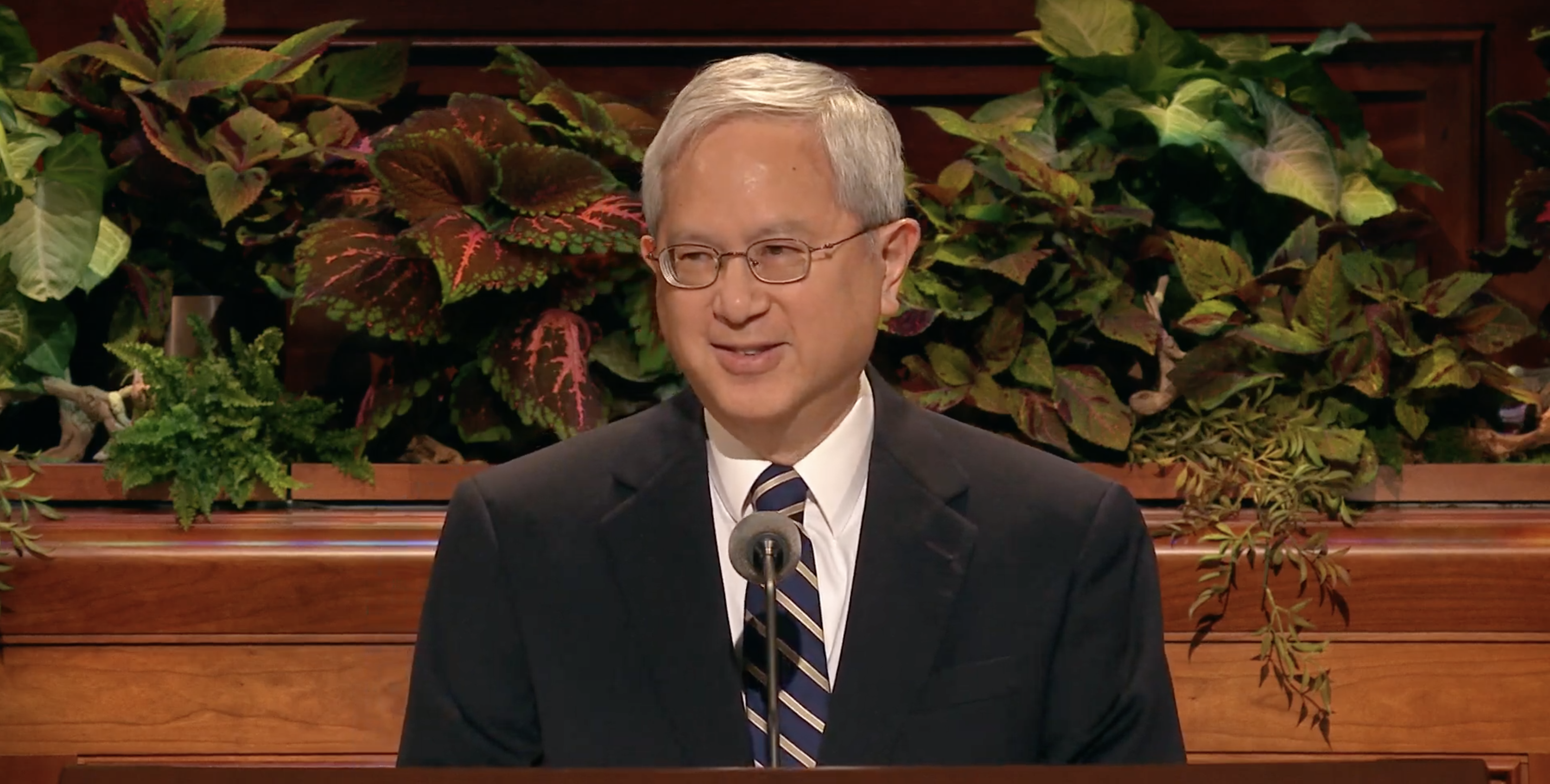
‘The age-old paradox is still true. In losing our worldly self through covenant belonging, we find and become our best eternal self—free, alive, real—and define our most important relationships. Covenant belonging is to make and keep solemn promises to God and each other through sacred ordinances that invite the power of godliness to be manifest in our lives. When we covenant all we are, we can become more than we are. Covenant belonging gives us place, narrative, capacity to become. It produces faith unto life and salvation.’
The paradox that Elder Gong is talking about is the one expressed in Matthew 10:39:
‘He that findeth his life shall lose it: and he that loseth his life for my sake shall find it. ‘
How can we explain this paradox?
What does it have to do with covenants?
What do you think Elder Gong means by ‘covenant belonging?
‘To belong with God and to walk with each other on His covenant path is to be blessed by covenant belonging. ‘
‘Covenant belonging is to make and keep solemn promises to God and each other through sacred ordinances that invite the power of godliness to be manifest in our lives. When we covenant all we are, we can become more than we are. Covenant belonging gives us place, narrative, capacity to become. It produces faith unto life and salvation.’
How does covenant belonging bless us?
‘ … covenant belonging centers in Jesus Christ as “mediator of the new covenant.”
In what ways does covenant belonging centre in Jesus Christ?
What does it mean to say that Jesus Christ is the mediator of the new covenant?
‘While situations differ, when we do all we can, the best we can, and sincerely ask and seek His help along the way, the Lord will guide us, in His time and manner, by the Holy Ghost. ‘
In what ways can the Holy Ghost guide us and speak to us?
‘The Spirit speaks to different people in different ways, and He may speak to the same person in different ways at different times. As a result, learning the many ways He speaks to us is a lifelong quest. Sometimes, He speaks to our “mind and in [our] heart” Doctrine and Covenants 8:2 in a voice that is small yet powerful, piercing “them that … hear to the center.” 3 Nephi 11:3 Other times His impressions “occupy [our] mind[s]” or “press … upon [our] feelings.”Doctrine and Covenants 128:1 Other times our bosom will “burn within [us].” Doctrine and Covenants 9:8 Still other times He fills our souls with joy, enlightens our minds, Doctrine and Covenants 6:14–15 11:13 or speaks peace to our troubled hearts. Doctrine and Covenants 6:22–23 ‘ (David P Homer, General Conference, April 2019)
Which of these have you experienced?
‘… the Book of Mormon is evidence we can hold in our hand of covenant belonging. ‘
In what ways is the Book of Mormon evidence of covenant belonging?
What can we learn about covenants from the Book of Mormon?
‘Restored priesthood authority and power to bless all His children is a third dimension of covenant belonging. In this dispensation, John the Baptist and the Apostles Peter, James, and John have come as glorified messengers from God to restore His priesthood authority. God’s priesthood and His ordinances sweeten relationships on earth and can seal covenant relationships in heaven. ‘
In what ways are God’s children blessed through the restored priesthood authority?
How have you been blessed?
‘ Finally, the blessings of covenant belonging come when we follow the Lord’s prophet and rejoice in temple-covenant living, including in marriage. Covenant marriage becomes supernal and eternal as we daily choose the happiness of our spouse and family before our own. As “me” becomes “we,” we grow together. We grow old together; we grow young together. As we bless each other across a lifetime of forgetting ourselves, we find our hopes and joys sanctified in time and eternity. ‘
What makes for a ‘covenant marriage’?
‘As we honor our covenants, we may sometimes feel we are in the company of angels. And we will be—those we love and who bless us on this side of the veil and those who love and bless us from the other side of the veil. ‘
Have you ever experienced love and blessings from the other side of the veil?
You may wish to ponder how you can more fully honour your covenants.
NB: Passages in italics are excerpts from Elder Gong’s address
 Latter-day Bloke
Thank you!!
Frank (from Germany)
LikeLike