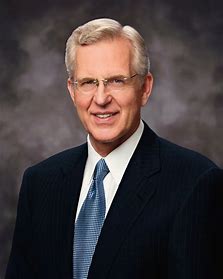
You ca watch or read Elder Christofferson’s talk here: https://www.churchofjesuschrist.org/study/general-conference/2023/04/41christofferson?lang=eng
The evening before the trials and crucifixion that awaited Him, Jesus joined in a Passover meal with His Apostles. At the end of this Last Supper, in a sacred Intercessory Prayer, Jesus petitioned His Father in these words: “Holy Father, keep through thine own name [mine Apostles] whom thou hast given me, that they may be one, as we are.”
Then, tenderly, the Savior expanded His petition to include all believers:
“Neither pray I for these alone, but for them also which shall believe on me through their word;
“That they all may be one; as thou, Father, art in me, and I in thee, that they also may be one in us.”
The Saviour was approaching the end of his life and had some precious time to give final instructions to his apostles. Why do you think He gave such prominence to the doctrine of being one?
Becoming one is a recurring theme in the gospel of Jesus Christ and in God’s dealings with His children. With respect to the city of Zion in Enoch’s day, it is said that “they were of one heart and one mind.” Of the early Saints in the primitive Church of Jesus Christ, the New Testament records, “The multitude of them that believed were of one heart and of one soul.”
What do you think it means to be ‘of one heart and one mind’ or ‘one heart and of one soul’?
In our own dispensation, the Lord admonished, “I say unto you, be one; and if ye are not one ye are not mine.” Among the reasons the Lord gave as to why the early Saints in Missouri had failed to establish a place of Zion was that they “are not united according to the union required by the law of the celestial kingdom.”
We need to recognise that perfect unity can be achieved only through God and Jesus Christ. Our efforts to become unified will be fully successful only if we focus first on our relationship with Them. The Guide to the Scriptures defines unity as ‘to become one in thought, desire, and purpose first with our Father in Heaven and Jesus Christ, and then with other Saints.‘
Where God prevails in all hearts and minds, the people are described as “in one, the children of Christ.”
Elder Holland referenced this scripture in his October 2021 General Conference talk:
”When the love of God sets the tone for our own lives, for our relationships to each other and ultimately our feeling for all humankind, then old distinctions, limiting labels, and artificial divisions begin to pass away, and peace increases. That is precisely what happened in our Book of Mormon example. No longer were there Lamanites, or Jacobites, or Josephites, or Zoramites. There were no “-ites” at all. The people had taken on just one transcendent identity. They were all, it says, to be known as “the children of Christ.” (4 Nephi 1:17)”
What is the connection between the love of God and being one?
When the resurrected Savior appeared to the ancient Book of Mormon peoples, He noted with disapproval that in the past there had been disputations among the people about baptism and other matters. He commanded:
“There shall be no disputations among you, as there have hitherto been; neither shall there be disputations among you concerning the points of my doctrine, as there have hitherto been.
“For verily, verily I say unto you, he that hath the spirit of contention is not of me, but is of the devil, who is the father of contention.”
You may have seen good people begin with a mild disagreement. It starts as a discussion but becomes a contest about who is right. Voices become gradually louder. Faces become a little more flushed. Instead of talking about the issue, people begin talking about themselves and why their view is more likely to be right. Pride gets in the way of unity.
You may even know people who have left the Church over injured pride.
William P. Barker tells a story about an evangelical church in Tennessee that performed the New Testament practice of foot washing. But then someone wanted to know which foot you should wash first. The Bible isn’t clear on this, and so an argument arose in the church about it.
The disagreement of which foot to wash first could not be settled, so the congregation divided. Now there is a church sign which reads: LEFT FOOT BAPTIST CHURCH.
Why would Satan want to foster contention in the restored Church?
In our extremely contentious world, how can unity be achieved, especially in the Church, where we are to have “one Lord, one faith, one baptism”? Paul gives us the key:
“For as many of you as have been baptized into Christ have put on Christ.
“There is neither Jew nor Greek, there is neither bond nor free, there is neither male nor female: for ye are all one in Christ.”
Elder Bruce C. Hafen offered a simple analogy to explain how bringing together those with diverse gifts, personalities, backgrounds and experiences can produce an enhanced and enriched form of unity:
‘For me, the ideal metaphor is a musical one: with our many voices, we could all sing in unison, in harmony, or in dissonance. Of these three, I prefer harmony, because it enables a variety of voices to blend into a fuller, richer sound than mere unison.’
Unity with our brothers and sisters in the body of Christ grows as we heed the second commandment—inextricably connected to the first—to love others as ourselves. And I suppose an even more perfect unity would obtain among us if we followed the Savior’s higher and holier expression of this second commandment—to love one another not only as we love ourselves but as He loved us. In sum, it is “every man seeking the interest of his neighbor, and doing all things with an eye single to the glory of God.”
President David O. McKay said: “It is the principle of unity that has enabled the wards, stakes, branches, and missions of the Church to progress and to accomplish the purposes for which the Church was established. It could not have been done by dissension and hatred. There have been difficulties. Each member of the Church has his own ideas. Sometimes they are not the same as those of the bishopric, and not the same as those of the presidency of the stake, and not the same as the Presidency of the Church; but each has had to submerge his own ideas to the good of the whole, and in that united purpose we have achieved something that is wonderful.”(General Conference, October 1967)
How will living the second great commandment increase unity in the Church?
Unity does not require sameness, but it does require harmony. We can have our hearts knit together in love, be one in faith and doctrine, and still cheer for different teams, disagree on various political issues, debate about goals and the right way to achieve them, and many other such things. But we can never disagree or contend with anger or contempt for one another. Said the Savior:
“For verily, verily I say unto you, he that hath the spirit of contention is not of me, but is of the devil, who is the father of contention, and he stirreth up the hearts of men to contend with anger, one with another.
“Behold, this is not my doctrine, to stir up the hearts of men with anger, one against another; but this is my doctrine, that such things should be done away.”
A year ago, President Russell M. Nelson pled with us in these words: “None of us can control nations or the actions of others or even members of our own families. But we can control ourselves. My call today, dear brothers and sisters, is to end conflicts that are raging in your heart, your home, and your life. Bury any and all inclinations to hurt others—whether those inclinations be a temper, a sharp tongue, or a resentment for someone who has hurt you. The Savior commanded us to turn the other cheek [see 3 Nephi 12:39], to love our enemies, and to pray for those who despitefully use us [see 3 Nephi 12:44].”
In the April 2023 General Conference, President Nelson said:
“The Savior’s Atonement made it possible for us to overcome all evil—including contention. Make no mistake about it: contention is evil! Jesus Christ declared that those who have “the spirit of contention” are not of Him but are “of the devil, who is the father of contention, and [the devil] stirreth up the hearts of men to contend with anger, one with another.” Those who foster contention are taking a page out of Satan’s playbook, whether they realize it or not. “No man can serve two masters.” We cannot support Satan with our verbal assaults and then think that we can still serve God”
In many ways, contention and its associated disease, unrighteous anger, have their roots in selfishness. Those who respond with anger when they are frustrated or annoyed are saying, in effect, that their feelings and opinions are more important than those of others. If circumstances or the actions of others do not coincide with what they think should be, such individuals are offended and become angry.
How does Satan stir up our hearts to contend one with another?
I say again that it is only in and through our individual loyalty to and love of Jesus Christ that we can hope to be one—one within, one at home, one in the Church, eventually one in Zion, and above all, one with the Father and the Son and the Holy Ghost.
What have you learned from studying this talk? What do you want to change?
Passages in italics are direct quotes from Elder Christofferson’s talk
 Latter-day Bloke