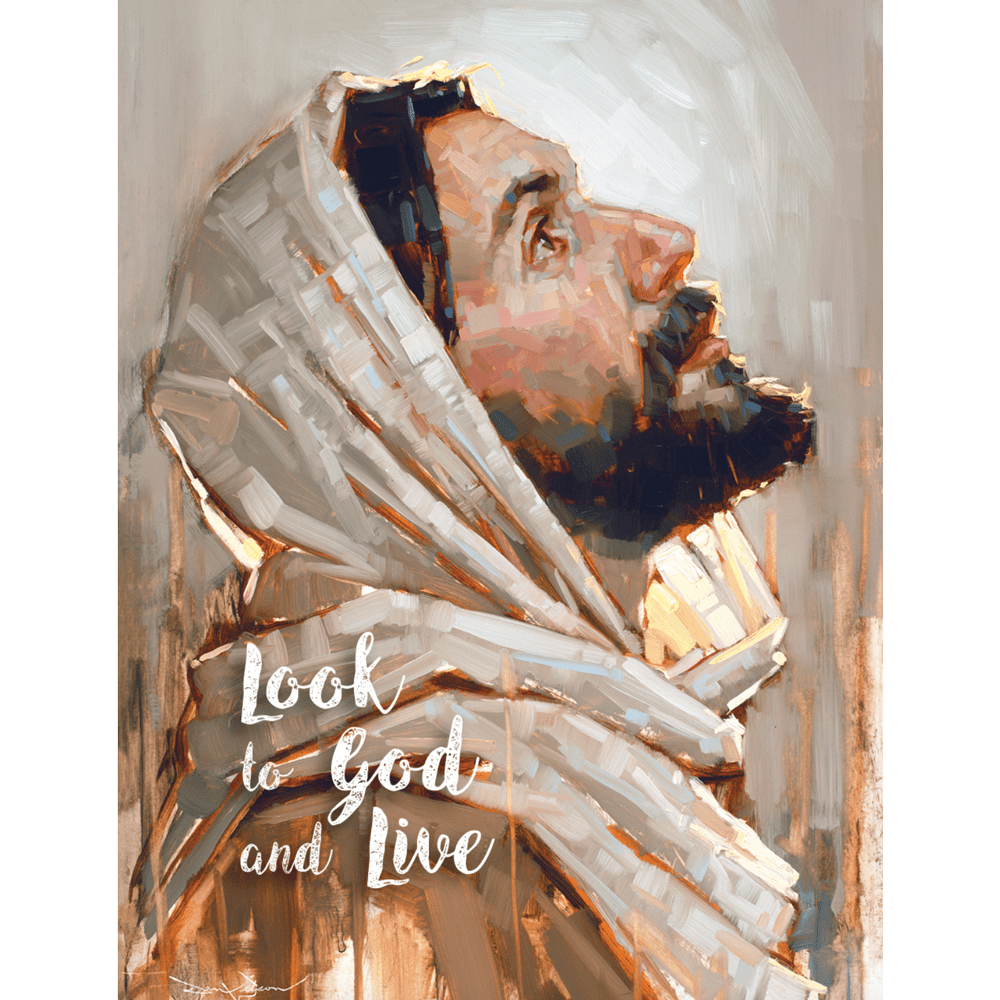
1. Alma shares his testimony and gives the records to his son Helaman.
Alma 36:16 Godly sorrow
“It is not uncommon to find men and women in the world who feel remorse for the things they do wrong…Godly sorrow is a gift of the Spirit. It is a deep realisation that our actions have offended our Father and our God. It is the sharp and keen awareness that our behaviour caused the Saviour, He who knew no sin, even the greatest of all, to endure agony and suffering…This very real mental and spiritual anguish is what the scriptures refer to as having ‘a broken heart and a contra spirit.’ Such a spirit is the absolute prerequisite for repentance.’ (Ezra Taft Benson, Mighty Change of Heart.)
Alma 36:19 I was harrowed up by the memory of my sins no more
“Satan will try to make us believe that our sins are not forgiven because we can remember them. Satan is a liar; he tries to blur our vision and lead us away from the path of repentance and forgiveness. God did not promise that we would not remember our sins, Remembering will help us avoid making the same mistakes again. But if we stay true and faithful, the memory of our sins will be softened over time. This will be part of the needed healing and sanctification process.” (Dieter F Uchtdorf, Point of Safe Return.)
Alma 36:26 Seen eye to eye as I have seen
“After a person has faith in Christ…then let him continue to humble himself before God, hungering and thirsting after righteousness, and living by every word of God, and the Lord will soon say unto him, Son, thou shalt be exalted….when any man obtains this last Comforter, he will have the personage of Jesus Christ to attend him, or appear unto him from time to time, and even He will manifest the Father unto him, and they will take up their abode with him, and the visions of the heavens will be opened unto him, and the Lord will teach him face to face, and he may have a perfect knowledge of the mysteries of the Kingdom of God.” (Teachings of the Prophet Joseph Smith, p. 149-50, italics added)
Alma 37:1 The records
“We not only saw the plates of the Book of Mormon but also the brass plates, the plates of the Book of Ether, the plates containing the records of the wickedness and secret combinations of the people of the world down to the time of their being engraved, and many other plates … there appeared as it were, a table with many records or plates upon it, besides the plates of the Book of Mormon, also the Sword of Laban, the Directors i.e., the ball which Lehi had-and the Interpreters [Urim and Thummim]. I saw them just as plain as I see this bed (striking the bed beside him with his hand), and I heard the voice of the Lord, as distinctly as I ever heard anything in my life declaring that the records of the plates of the Book of Mormon were translated by the gift and power of God.” (1878 interview between Orson Pratt and David Whitmer, recorded in Book of Mormon Compendium, pp. 55-56)
Alma 37:6-7 By small and simple things
“We observe vast, sweeping world events; however, we must remember that the purposes of the Lord in our personal lives generally are fulfilled through the small and simple things and not the momentous and spectacular. …
“Great and marvelous events seem to motivate us, but small things often do not hold our attention. Noting that the Liahona worked by faith, Alma stated, ‘Nevertheless, because those miracles were worked by small means … [the people of Lehi] were slothful, and forgot to exercise their faith and diligence and then those marvelous works ceased, and they did not progress in their journey’ (Alma 37:41).
“Is our journey sometimes impeded when we forget the importance of small things? (see Alma 37:46). Do we realize that small events and choices determine the direction of our lives just as small helms determine the direction of great ships? (see James 3:4; D&C 123:16). …
“… We need to have family and personal prayers; study the scriptures, particularly the Book of Mormon; hold family home evenings; follow the admonition of the Savior to love one another; and be thoughtful, kind, and gentle within the family. Through these and other similar small and simple things, we have the promise that our lives will be filled with peace and joy” (M Russell Ballard in Conference Report, Apr. 1990).
Alma 37:8 Enlarged the memory of this people
‘While faith is not a perfect knowledge, it brings a deep trust in God, whose knowledge is perfect! Otherwise, one’s small data base of personal experience permits so few useful generalizations! But by searching the holy scriptures, we access a vast, divine data bank, a reservoir of remembrance. In this way, the scriptures can, as the Book of Mormon says, enlarge the memory. ‘ (Neal A Maxwell, General Conference, April 1991)
Alma 37:34 Never be weary of good works
“Paradoxical as it sounds, more diligence actually brings more relief. Any selfishness, on the other hand, magnifies our weariness. Selfishness not only shrinks the quantity of service we render but also provides none of the needed renewal, no ‘rest to [our] souls.’” (Neal A Maxwell, If Thou Endure It Well, p. 113)
Alma 37:35 Learn wisdom in thy youth
“As I look at you youth, I think not only of what you are, but of what you may become. I also remember who you are, and I plead with you to do likewise. You are the sons and daughters of Almighty God. Each of you has a destiny to fulfill, a life to live, a contribution to make, a goal to achieve. The future of the kingdom of God upon the earth will, in part, be determined by your devotion.
“When this perspective is firmly in mind, you can appreciate the absolute necessity of diligence in this, your period of preparation. Neglect to prepare and you mortgage your future.
“…these challenging times will require your finest efforts. A half-hearted effort will not suffice. You must labor with your might.
“This is your world. Whether you like it or not, you are engaged in the race of your life. At stake is eternal life—yours. What shall be the outcome? Will you be a leader of men and a servant of God? Or will you be a servant of sin and a follower of Satan? Decisions determine destiny. In the quiet of your study, surrounded by books written by the finest minds of men, listen for and hearken to the Master’s invitation: ’…learn of me; for I am meek and lowly in heart: and ye shall find rest unto your souls.’ (Matthew 11:29–30.) Such learning transcends the classroom, it endures beyond graduation, it meets the test of experience.’ (Thomas S Monson, Pathways To Perfection, p. 252-3)
Alma 37:36-37 Cry unto God
“We would say to the brethren, seek to know God in your closets, call upon him in the fields. Follow the directions of the Book of Mormon, and pray over, and for your families, your cattle, your flocks, your herds, your corn, and all things that you possess; ask the blessing of God upon all your labors, and everything that you engage in. Be virtuous and pure; be men of integrity and truth; keep the commandments of God; and then you will be able more perfectly to understand the difference between right and wrong-between the things of God and the things of men; and your path will be like that of the just, which shineth brighter and brighter unto the perfect day.” (Joseph Smith, History of the Church, 5:31)
Alma 37:43 These things are not without a shadow
‘One imagines that Helaman is wondering by this time why his father is rehearsing all this ancient history about their ancestors and the Liahona. Alma gets to the heart of it in verse 43, when he suggests that the Liahona story is a “shadow” of an important additional compass. He doesn’t want his son to ever become “slothful” in attending to the will of God. As Grant Hardy points out, it’s no coincidence that this conversation occurs in the context of the transference of the sacred records from father to son. The scriptures are to be another Liahona, or compass, to guide people to truth.’ (Jana Reiss, The Book of Mormon: Selections Annotated and Explained)
Alma 37:46 Let us not be slothful
“Muttering and murmuring are often the expressions of our conscience gone grumpy; it is precisely because we know we need to respond affirmatively (and have some inkling about what’s coming) that we let off steam—we start puffing in advance of the climb. These are reactions genuinely to be avoided, since they can precede the keeping of a commandment or the fulfilling of a task with a slothful heart, which is more serious. Mostly, to avoid muttering, we need to trust more. So many of the things muttered about before turn out to be marvelous experiences later, and we are inwardly, and deservedly, ashamed for having grumbled.” (Neal A Maxwell, Deposition of a Disciple, p. 31)
2. Alma praises and encourages his son Shiblon.
Alma 38:5 Trust in God
“There is not a man upon the earth that has put his trust in God, I do not care what part of the world he has been in, but what can say that he delivered him. I know that has been the case with me, emphatically so. I have been satisfied, when in foreign lands and in strange countries, where I had no access but to the Almighty, that he was on my side, and I know that he has answered my prayers. (John Taylor, Journal of Discourses, 8:96, June 17, 1860)
“It isn’t as bad as you sometimes think it is. It all works out. Don’t worry. I say that to myself every morning. It will all work out. If you do your best, it will all work out. Put your trust in God, and move forward with faith and confidence in the future. The Lord will not forsake us…If we put our trust in Him, if we will pray to Him, if we will live worthy of His blessings, He will hear our prayers.” (Gordon B Hinckley, Latter-day Counsel.)
Alma 38:11 See that ye are not lifted up unto pride
‘So far, Alma’s advice to his son Shiblon has been similar to his advice to Helaman. He told both of the promise that those who keep the commandments will prosper in the land. He told both of his conversion story. He encouraged both to learn wisdom. But Shiblon was different than Helaman. Of all Alma’s sons, Shiblon was apparently the most faithful. Yet, Alma is concerned about one thing—pride.
According to the theme of the Book of Mormon, it is among the most righteous that pride becomes a snare. When Shiblon was righteous, his father warned him of pride. When Oliver Cowdery was righteous, the Lord warned him of pride (DC 23:1). Whenever the saints have been righteous, the prophets have warned them of pride. Unfortunately, there is something about righteousness which inevitably draws us toward self-righteousness.’ (Bryan Richards, GospelDoctrine.com)
 Latter-day Bloke