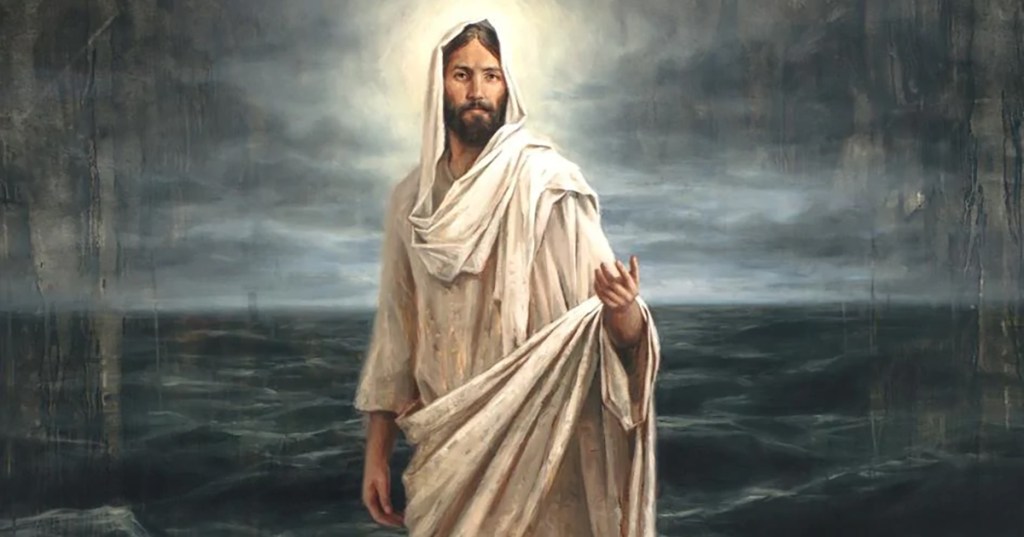
Moroni 10:1 I write unto my brethren the Lamanites
“It is surprising that someone would write a letter to those who have destroyed his people—to his enemies who want to kill him too—and amazing that the letter is one of counsel rather than complaint or demand for vengeance. Moroni’s relation to his enemies is unusual, even for a prophet. We ought to wonder at his charity, but that charity is a model for what we should imitate in our own lives. It isn’t easy to do that. Anyone who has been humiliated or seriously hurt by another knows how difficult is forgiveness, the love that imitates Christ’s redeeming love. It may be that, except for Jesus Christ, we have no better model than Moroni. As we will see, Moroni takes that love to be the heart of the gospel.” (James E. Faulconer, “Sealings and Mercies: Moroni’s Final Exhortations in Moroni 10,” Journal of the Book of Mormon and Other Restoration Scripture 22/1 (2013): 4–19.)
Moroni 10:3 Ponder it in your hearts
“The last five words of [Moroni 10:3] offer an important admonition—‘ponder it in your hearts.’ What is the antecedent of ‘it’—the thing that we are to ponder? It is ‘how merciful the Lord hath been unto the children of men, from the creation of Adam even down until the time that ye shall receive these things.’ We are to remember how loving, how provident, how good, how forgiving our Heavenly Father has been toward us.
“What usually happens when we begin to ponder how merciful the Lord has been to mankind? To us personally? What happens when we count our blessings, or perhaps our sins for which we must ask his forgiveness, and recognize his hand in our individual lives? Is it not true that our hearts turn to the Lord in love and gratitude? Do our faith and humility increase? Yes, and that, in my judgment, is the impact of verse 3—following the counsel therein helps us to become more humble, more willing and ready to receive new information and knowledge with an open mind” (Gene R Cook, “Moroni’s Promise,” Ensign, Apr. 1994, 12).
Moroni 10:4 With a sincere heart
“Moroni makes an explicit promise of a spiritual manifestation to one who seeks to know the truthfulness of the Book of Mormon. But, it must be noted, this promise is only extended to the person who will ‘ask with a sincere heart, with real intent, having faith in Christ.’ The manifestation that is given in response to this promise, therefore, is not a sign given to convert an unbeliever. It is a sign that follows individual faith and commitment.” (Dallin H Oaks, The Lord’s Way, p. 98)
Moroni 10:8-18 Gifts of the Spirit
“[The purpose of spiritual gifts] is to enlighten, encourage, and edify the faithful so that they will inherit peace in this life and be guided toward eternal life in the world to come. Their presence is proof of the divinity of the Lord’s work; where they are not found, there the Church and kingdom of God is not. The promise is that they shall never be done away as long as the earth continues in its present state, except for unbelief (Moro. 10:19), but when the perfect day comes and the saints obtain exaltation, there will be no more need for them. As Paul expressed it, ‘When that which is perfect is come, then that which is in part shall be done away.’ (1 Cor. 13.)
“Faithful persons are expected to seek the gifts of the Spirit with all their hearts. They are to ‘covet earnestly the best gifts’ (1 Cor. 12:31; D.&C. 46:8), to ‘desire spiritual gifts’ (1 Cor. 14:1), ‘to ask of God, who giveth liberally.’ (D.&C. 46:7; Matt. 7:7–8.) To some will be given one gift; to others, another; and ‘unto some it may be given to have all those gifts, that there may be a head, in order that every member may be profited thereby.’ (D.&C. 46:29.)” (Bruce R McConkie, Mormon Doctrine)
Moroni 10:30 Come unto Christ
“[Jesus Christ] is the pivotal figure of our theology and our faith. Every Latter-day Saint has the responsibility to know … with a certainty beyond doubt that Jesus is the resurrected, living Son of the living God” (Gordon B Hinckley, ‘Fear Not to Do Good,’ Ensign, May 1983, 80).
 Latter-day Bloke