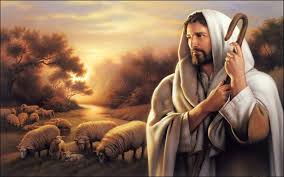
“I, God, am endless”
D&C 19:10 I am endless, and the punishment which is given from my hand is endless
“Contemplate the condition of the world when this Gospel was restored! What was known about heaven? What was known about hell? There are two places, one of bliss, the other place of torment. How much terror was entertained by the people at large concerning this place of torment. To have to think that this was endless; to think how the hearts of mothers were wrung with anguish at the death of their wayward children, of their loved ones, when they were told by men who assumed authority and to whom they had been taught to look with respect, that they were eternally damned—sent to a place of torment worlds without end! Is it any wonder that men wished they had never been born? They did not know what to do. Suicide brought no relief; they could not get deliverance from the inexorable consequences of living, because their souls were indestructible. They could not hope to escape from the justice of God, go where they might. And this feeling of hopelessness and misery filled thousands of bosoms, millions, I may say. But what did this Gospel do? It brought light from God, the author of our being. Instead of thinking it was a bad condition to be born, it produced a feeling of gladness in the hearts of men and women that they ever had been born; because when they saw the justice of God, that they would get rewarded according to the deeds done in the body, all fear vanished, for they would be dealt with by a just and merciful God and not a tyrant, such as the world described the Lord to be.” (George Q Cannon)
“This was a new doctrine in the days of Joseph. It brought enemies to their feet. Eternal punishment, everlasting punishment, all punishment will accord with the mind and will of God. As our works have been, so our reward will be. From that there is no escape.
The implication of this doctrine is that through the ages a sinner may atone for his misdeeds. It was a startling doctrine to hurl at a world traditionated (sic) in one of the blackest errors of apostate Christianity.
The whole revelation gives much comfort to all people“ (John A. Widtsoe, Joseph Smith–Seeker after Truth, Prophet of God [Salt Lake City: Bookcraft, 1951], 176.)
Jesus suffered so that I can repent and come unto Him.
D&C 19:16-17 I, God, have suffered these things for all, that they might not suffer if they would repent
“It seems almost beyond comprehension to think that He paid this enormous price for each of us. And yet, as far as we are concerned individually, unless you and I do our part, we will not gain full benefit from the Atonement. It is that covenant relationship—that mutual trust—that makes His atonement such a personal gift. It brings us protection, perennial hope, and the promise of joy.” (Russell M Nelson, “Standards of the Lord’s Standard-Bearers,” Ensign, Aug. 1991, 7)
This wonderful plan of happiness was provided at a very high price… Every drop of divine blood was payment for a costly plan that provided us with moral agency, the ability to become righteous or to sin, and the miracle of forgiveness, which enables us to become cleansed from our sins through repentance, priesthood ordinances, and endurance to the end. (Spencer J Condie, “Agency: The Gift of Choices,” Ensign, Sept. 1995, 19)
D&C 19:18 Which suffering caused myself, even God, the greatest of all, to tremble because of pain
“All that the human frame can tolerate of suffering was to be heaped upon His shrinking body; every misery that cruel and crushing insult can inflict was to weigh heavy on His soul; and in this torment of body and agony of soul even the high and radiant serenity of His divine spirit was to suffer a short but terrible eclipse. Pain in its acutest sting, shame in its most overwhelming brutality, all the burden of the sin and mystery of man’s existence in its apostasy and fall—this was what He must now face in all its most inexplicable accumulation.” (Frederic Farrar, Life of Christ, 575)
“A mortal man could not have stood it—that is, a man such as we are. I do not care what his fortitude what his power, there was no man ever born into this world that could have stood under the weight of the load that was upon the Son of God, when he was carrying my sins and yours and making it possible that we might escape from our sins. He carried that load for us if we will only accept him as our Redeemer and keep his commandments. Some of us find it so hard, so terribly hard, to do the little things that are asked of us, and yet he was willing to carry all that tremendous load and weight of sin-not his own, for he had no sin. He did it that we might escape. He paid the price.” (Joseph Fielding Smith, Doctrines of Salvation, 3 vols., edited by Bruce R. McConkie [Salt Lake City: Bookcraft, 1954-1956], 1: 130.)
“No member of this Church must ever forget the terrible price paid by our Redeemer, who gave His life that all men might live—the agony of Gethsemane, the bitter mockery of His trial, the vicious crown of thorns tearing at His flesh, the blood cry of the mob before Pilate, the lonely burden of His heavy walk along the way to Calvary, the terrifying pain as great nails pierced His hands and feet, the fevered torture of His body as He hung that tragic day, the Son of God, crying out, “Father, forgive them; for they know not what they do” (Luke 23:34).
…We cannot forget that. We must never forget it … the Son of God, gave Himself a vicarious sacrifice for each of us.”(Gordon B Hinckley, “Our One Bright Hope,” Ensign, Apr. 1994, 4)
D&C 19:18 to bleed at every pore
“The word Gethsemane comes from two Hebrew roots: gath, meaning “press,” and shemen, meaning “oil,” especially that of the olive.
There olives had been pressed under the weight of great stone wheels to squeeze precious oil from the olives. So the Christ in the Garden of Gethsemane was literally pressed under the weight of the sins of the world. He sweated great drops of blood—his life’s ‘oil’—which issued from every pore. “
(Russell M Nelson, “Why This Holy Land?” Ensign, Dec. 1989, 17–18)
Peace comes from learning of Jesus Christ and following Him.
D&C 19:23
Even if all the world is crumbling around us, the promised Comforter will provide His peace as a result of true discipleship. Ultimate total peace will come, of course, because He overcame the world. But we can have His peace with us irrespective of the troubles of the world. His peace is that peace, that serenity, that comfort spoken to our hearts and minds by the Comforter, the Holy Ghost, as we strive to follow Him and keep His commandments. (Dennis E Simmons, “His Peace,” Ensign, May 1997, 31)
God’s blessings are greater than the treasures of the earth.
“One of Martin Harris’s greatest contributions to the Church, for which he should be honored for all time, was his financing the publication of the Book of Mormon. In August 1829 he mortgaged his home and farm to Egbert B. Grandin to secure payment on the printer’s contract. Seven months later, the 5,000 copies of the first printing of the Book of Mormon were completed. Later, when the mortgage note fell due, the home and a portion of the farm were sold for $3,000. In this way, Martin Harris was obedient to the Lord’s revelation:
“Thou shalt not covet thine own property, but impart it freely to the printing of the Book of Mormon. …
“Pay the debt thou hast contracted with the printer. Release thyself from bondage” (D&C 19:26, 35).
Other records and revelations show Martin Harris’s significant involvement in the activities of the restored Church and his standing with God. He was present at the organization of the Church on April 6, 1830, and was baptized that same day. A year later he was called to journey to Missouri with Joseph Smith, Sidney Rigdon, and Edward Partridge (see D&C 52:24). In Missouri that year—1831—he was commanded to “be an example unto the church, in laying his moneys before the bishop of the church” (D&C 58:35), thus becoming the first man the Lord called by name to consecrate his property in Zion. Two months later he was named with Joseph Smith, Oliver Cowdery, Sidney Rigdon, and others to be “stewards over the revelations and commandments” (D&C 70:3; see also D&C 70:1), a direction to publish and circulate what later became the Doctrine and Covenants.” (Dallin H Oaks, “The Witness: Martin Harris,” Ensign, May 1999, 36-37)
 Latter-day Bloke