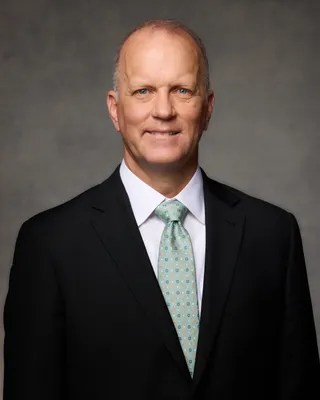
Elder James E. Evanson was sustained as a General Authority Seventy of The Church of Jesus Christ of Latter-day Saints at the April 2025 general conference. At the time of his call, he had been serving as a Sunday school teacher and Activity Days leader. Elder Evanson has served in a number of Church callings, including full-time missionary in the Arizona Tempe Mission, high councilor, stake young men president, stake president, mission president of the Utah Orem Mission, and Area Seventy.
Elder Evanson received a bachelor of science degree in dental materials in 1993 followed by a doctor of dental surgery degree in 1995, both from the University of Alberta. He has worked as a dentist in private practice for over 26 years.
My Pearl among Women and I were blessed to be in the Conference Centre to hear Elder Evanston speak. As Service Mission Advisers we were thrilled to hear him speak about service missionaries.
While the Savior was traveling through Bethsaida, some individuals brought a blind man to Him. Perhaps they were hoping to see a miracle firsthand. The Savior “took the blind man by the hand, and led him out of the town” to heal him privately. Initially, the healing seemed less than effective. The man “looked up, and said, I see men as trees, walking.” Jesus, compassionately, “put his hands again upon his eyes, and made him look up.” With that additional touch of the Savior’s hands, the blind man now “saw … clearly.”
This is just one example of how the Savior’s life is characterized by humble acts of service. He reminds us that He “came not to be ministered unto, but to minister” and then invites us to follow His example by going the extra mile, giving to those who ask of us, and loving our neighbor. When asked, “Who is my neighbour?” Christ shared the parable of the good Samaritan, with a charge to “go, and do thou likewise.”
What does ‘go and do likewise’ mean to you?
Missionaries of The Church of Jesus Christ of Latter-day Saints are modern-day examples of the good Samaritan that Christ invites us to become. I would like to highlight those missionaries who are called to service assignments. They are examples to us of how service (1) opens hearts to the gospel of Jesus Christ, (2) allows all of us to minister regardless of our circumstances, and (3) brings the power of Christ into our lives.
Do you have any young service missionaries in your ward or stake? Do you know what they do?
First, Service Opens Hearts to the Gospel of Jesus Christ
In about 91 BC, Ammon, a Book of Mormon missionary, introduced himself to King Lamoni by saying, “I desire to dwell among this people for a time; … [and] I will be thy servant.” Because of his service to the king, Ammon was granted an opportunity to “speak boldly, … and tell [King Lamoni] … by what power” he had performed his service. In return, the king promised that “whatsoever [Ammon] desirest … [the king would] grant it.” Ammon’s only request was that the king listen to the message of the gospel of Jesus Christ. Ammon’s service resulted in “thousands of souls [brought] to repentance.”
In his humble mission to simply serve faithfully, Ammon was strengthened by God and through both mightiness and faithful service astounded the king. The powerful fruit of Ammon’s service, led to an opportunity to teach Lamoni about God; dedicated service opened the door to some very hard hearts.
The results of Ammon’s ministry also led to Aaron and his companions being delivered out of prison and entire cities and lands converted to the Lord and peace established. All of this because one man said, “I will be thy servant” and followed it up with faithful action.
Have you thought about Ammon as a service missionary before?
In our day, service continues to lead others to the gospel. Sister Bevan was serving as a teaching missionary when she began experiencing health issues requiring her to return home for treatment. Instead of being released, she was able to continue serving as a service missionary from home.
While visiting a park, Sister Bevan and a friend were prompted to talk to a mother with four young children, but they hesitated and the family drove away. The next day, they returned to the park, praying that this family would be there. Miraculously, the mother was sitting in the exact same spot as the day before. This time Sister Bevan and her friend approached the mother, got to know her, and discovered that she was in desperate need of temporal help. They provided assistance and then invited her to learn about the gospel.
Because of that service and invitation, the mother and her oldest child were baptized, followed by the next oldest a year later. They remain active members today. Sister Bevan knew this experience was divinely inspired, and it “proved to [her] that [she] was exactly where God needed [her] to be.”
What did you learn from this story about Sister Bevan, a service missionary?
Like Ammon and Sister Bevan, as we serve others, we “show forth good examples unto them” and they desire to know the “reason of the hope that is in [us].”
Jesus invites us to “go, and do thou likewise.”
Second, Service Allows All of Us to Minister Regardless of Our Circumstances
President Russell M. Nelson called on “every worthy, able young man to prepare for and serve a mission” and for every able young sister to “pray to know if the Lord would have [her] serve a mission.” He promised that “your decision to serve a mission, whether a proselyting or a service mission, will bless you and many others.” Service missions changed the definition of the word able. Now every worthy young man and woman who desires to serve a full-time mission for the Lord can do so, with very few exceptions.
How have service missions changed the definition of the word able?
Elder Holgado is an example of being able to serve regardless of personal circumstances. He was born with a rare genetic disorder, which precluded him from serving a teaching mission. Elder Holgado was called as a service missionary and volunteered in the bishops’ storehouse, where he helped others get the assistance they needed. He stocked shelves, bagged vegetables, and crushed cardboard boxes.
As Elder Holgado spoke in sacrament meeting after his mission, he shared that “God needs service missionaries. He needs people to love and serve others. These people stock toilet paper, bag broccoli, build furniture, and are good to people.”
What did you learn about service missionaries from the example of Elder Holgado?
Both teaching and service missionaries are called by a Prophet of God to represent Jesus Christ. They have different capabilities and needs but they are all trying to help others come unto Christ.
You don’t need to have a service assignment or wear a name tag to do good. Every act of service is recognized by the Savior. We are all able to help others come unto Christ by serving with loving-kindness. We can all minister in Christ’s name to the one through the power of the Holy Ghost and live as examples of faith in Jesus Christ. Service allows us to present ourselves as living sacrifices who are acceptable to God.
In this paragraph Elder Evanson refers to the Missionary Purpose for Service Missionaries – “Our purpose is to help others come into Christ, by serving with loving kindness as the Savior would. We minister in his name to the one through the power of the Holy Ghost and live as an example of faith in Jesus Christ, repentance, covenant keeping with God, and enduring to the end.”
Teaching and Service missionaries have separate Missionary Purposes but each is focused on helping others to come unto Christ.
Jesus invites us to “go, and do thou likewise.”
Third, Service Brings the Power of Christ into Our Lives
A young missionary who transferred from a teaching assignment to a service assignment struggled with some personal challenges that left him needing Christ’s healing power. Consecrated service brought that power into his life. He said, “I felt that when I was struggling, I could feel Christ lifting me up. There is something special about seeing Him bless people through a food pantry, in the temple, and through His gospel.”
This elder began to feel deeper joy, and his newfound enthusiasm blessed him and his entire family. The Spirit entered their home more abundantly, they attended the temple together more regularly, and Christ became a greater focus in their family. This missionary believes that Christ saved his life and blessed his family through service.
How did transferring from a teaching mission to a service assignment bless this young man and his family?
President Nelson taught, “Willingness to serve and strengthen others stands as a symbol of one’s readiness to be healed” by the redemptive power of the Savior.
All young men and all young women who feel inspired to should serve a mission. Through inspiration they will be assigned to either a teaching or a service mission. That mission will be perfectly tailored to their spiritual needs and if they respond positively and throw themselves into their assigned mission they will have a transformational experience and will be on their way to becoming lifelong disciples of Jesus Christ.
Jesus invites us to “go, and do thou likewise.”
How does serving others bless the person giving service as well as the person receiving service?
Service Missionaries Are Examples of Consecrated Disciples of Jesus Christ
When you or a family member is blessed with a call as a service missionary, that is a moment to celebrate. Your family will now have a set-apart representative of the Lord Jesus Christ living in your home. That will change all of you for the good. There should be no disappointment in any call to serve. We sing, “I’ll go where you want me to go” and “I’ll be what you want me to be.” Here is an opportunity to show that we really mean what we say!
All young men aged 18-25 and young women aged 19-29 apply through the same online missionary recommendation system. Service missionaries do not have to be endowed and male applicants do not need to hold the Melchizedek Priesthood. All receive a call from the Prophet. All receive a ministerial certificate signed by the Prophet. All are set apart by their Stake President and all help others to come unto Christ.
To all of you who serve, and especially to the over 4,000 young service missionaries, we love you! If teaching missionaries are the Lord’s mouth, then service missionaries are the Lord’s hands, and you are not second-class missionaries. Each of you is vital to the gathering of Israel. President Nelson taught that “anytime we do anything that helps anyone … to make and keep their covenants with God, we are helping to gather Israel.”
Many of us are familiar with the Primary Song “I Hope They Call Me on a Mission”
‘I hope they call me on a mission
When I have grown a foot or two.
I hope by then I will be ready
To teach and preach and work as missionaries do.
I hope that I can share the gospel
With those who want to know the truth.
I want to be a missionary
And serve and help the Lord while I am in my youth.’
Did you notice that the two verses could be interpreted as being about two different types of missionary?:
Verse 1 – teaching missionaries – those who teach and preach
Verse 2 – service missionaries – those who share the gospel by serving and helping
You service missionaries gather Israel in so many ways, and your service changes lives. Often you don’t know who the beneficiary of your service is, but God knows. Always remember that “inasmuch as ye [serve] one of the least of these, … ye [serve Him].” We hear your voices as you volunteer at Church call centers; we see your smiles as you help in community organizations; and we feel your light as you serve in temples. You feed the hungry, clothe the naked, and give drink to the thirsty.
We all need to go and do likewise.
What might “go and do likewise” look like in:
- our families?
- our ward or quorum?
- our workplace or community?
Service Is the Lifeblood of Disciples of Christ
Service has the power to open hearts to the gospel and allows all of us to give our whole soul to Christ. It changes our hearts to become more like Him, and in the process, we lift others. President Nelson once asked, “In this world smitten with spiritual decay, can individuals … make a difference?” His answer: “Yes! … ‘The covenant people of the Lord, … armed … with the power of God in great glory’ … can lift the lives of all humankind.” Through service we change hearts—and the world.
How can we make a difference as individuals?
Christ “went about doing good.” He ministered to the sick, gave sight to the blind, and visited the downtrodden. He cooked meals, helped at wedding feasts, and fed thousands who were hungry. As we give service in Christ’s name to the one, we become increasingly holy and worthy of the gift of eternal life. Jesus Christ lives. He is my Savior and yours. He is our Redeemer. He is our great example of ministering. I invite each of us to go and do likewise. In the name of Jesus Christ, amen.
What did you learn from Elder Evanson’s talk?
NB: The passages in italics are the text of Elder Evanson’s talk.
If this post has been helpful, please leave a ‘like’ or a comment. Thank you?
 Latter-day Bloke