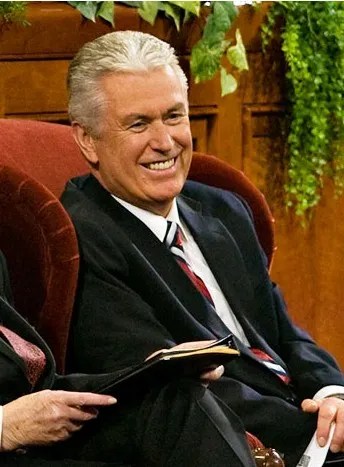
You can watch Elder Uchtdorf’s talk here.
Summary:
President Uchtdorf centers his message on the experience of the women who first discovered the empty tomb of Jesus Christ. Despite grief, confusion, and unanswered questions, they moved forward in faith—and their encounter with the risen Christ changed them and the world.
He teaches that the Resurrection is not just a historical event but a present reality: Christ lives and actively guides, comforts, and strengthens His followers today. The invitation is for each person to “encounter the empty tomb” spiritually—to gain a personal witness of the living Christ—and then share that witness through discipleship and service.
Key quotes:
‘This encounter at the empty tomb changed them forever. It changed the world.’ (Paragraphs 17 and 18)
‘Because of what happened on that Sunday morning, we can speak of Jesus Christ in the present tense.’ (Paragraph 22)
‘He lives and is an active, ongoing influence in His Church and in the personal lives of those who follow Him.’ (Paragraph 26)
‘Because Jesus Christ conquered death, surely He can conquer any danger, confusion, or doubt we face.’ (Paragraph 27)
‘We must encounter the empty tomb, experience the reality of what it means, and, in turn, share that witness with others.’ (Paragraph 35)
‘Jesus Christ lives and is actively blessing all who seek him.’ (Paragraph 37)
‘We too can rise to Jesus’s challenge and spread the glorious news of the empty tomb.’ (Paragraph 38)
‘We can feel a renewed determination and embrace the challenge of becoming lifelong missionaries and disciples of Christ through courageous and humble acts of discipleship in our daily lives.’ (Paragraph 40)
‘…even when things seem dark, we step forward in faith, with courage and humility, and walk toward the Savior’s light.’ (Paragraph 44)
‘That encounter at the tomb will do the same for all who earnestly seek Him. It will make a difference to you.’ (Paragraph 57)
Questions to discuss or ponder:
How can we move forward when we have unanswered questions, like the women at the tomb? (Paragraph 10)
What acts of service can we give Jesus? (Paragraph 14)
In what ways is Jesus Christ an active, ongoing influence in your life? (Paragraph 26)
What does Elder Uchtdorf mean when he says that we must encounter the empty tomb? (Paragraph 35)
Has the Saviour entrusted you with sacred spiritual experiences? (Paragraph 37)
How can we be lifelong missionaries and disciples of Jesus Christ? (Paragraph 40)
Why can service and love speak more powerfully than words? (Paragraph 42)
What can we do when things seem dark? (Paragraph 42)
In what ways can we be witnesses of Jesus Christ? (Paragraph 52)
Invitations and applications:
See and speak of Christ as a present, active influence. (Paragraph 26)
Come to know for yourself that Jesus Christ lives. (Paragraphs 33 and 34)
Live the message of the risen Christ. (Paragraph 42)
Move forward spiritually despite uncertainty, questions, or doubt. (Paragraphs 43 and 44)
Make Jesus Christ our guide for making choices. (Paragraph 50)
Each day this week notice the influence of Jesus Christ.
Additional Thoughts:
President Gordon B Hinckley:
“I have stood at the tomb of Napoleon in Paris, at the tomb of Lenin in Moscow, and before the burial places of many others of the great leaders of the earth. In their time they commanded armies, they ruled with almost omnipotent power, their very words brought terror into the hearts of people. I have reverently walked through some of the great cemeteries of the world. I have reflected quietly and thoughtfully as I have stood in the military cemetery in Manila in the Philippines where are buried some 17,000 Americans who gave their lives in the Second World War and where are remembered another 35,000 who died in the terrible battles of the Pacific and whose remains were never found. I have walked with reverence through the British cemetery on the outskirts of Rangoon, Burma, and noted the names of hundreds of young men who came from the villages, towns, and great cities of the British Isles and gave their lives in hot and distant places. I have strolled through old cemeteries in Asia and Europe and yet other places and reflected on the lives of those who were once buoyant and happy, who were creative and distinguished, who gave much to the world in which they lived. They have all passed into the oblivion of the grave. All who have lived upon the earth before us are now gone. They have left all behind as they have stepped over the threshold of silent death. None has escaped. All have walked their way to “the undiscovered country from whose bourn no traveler returns” (Hamlet, act 3, scene 1, lines 79–80). Shakespeare so described it.
But Jesus the Christ changed all that. Only a God could do what He did. He broke the bonds of death. He too had to die, but on the third day, following His burial, He rose from the grave, “the firstfruits of them that slept” (1 Cor 15:20) and in so doing brought the blessing of the Resurrection to every one of us.”
If this post has been helpful, please leave a ‘like’ or a comment. Thank you!
 Latter-day Bloke