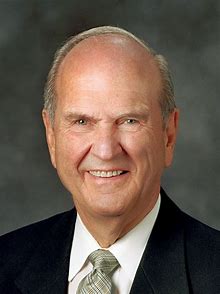
President Nelson’s talk can be viewed at:
Peacemakers Needed (churchofjesuschrist.org)
President Nelson shared an experience that happened in an operating theatre:
During my surgical internship many years ago, I assisted a surgeon who was amputating a leg filled with highly infectious gangrene. The operation was difficult. Then, to add to the tension, one of the team performed a task poorly, and the surgeon erupted in anger. In the middle of his tantrum, he threw his scalpel loaded with germs. It landed in my forearm!
Everyone in the operating room—except the out-of-control surgeon—was horrified by this dangerous breach of surgical practice. Gratefully, I did not become infected. But this experience left a lasting impression on me. In that very hour, I promised myself that whatever happened in my operating room, I would never lose control of my emotions. I also vowed that day never to throw anything in anger—whether it be scalpels or words.
Even now, decades later, I find myself wondering if the contaminated scalpel that landed in my arm was any more toxic than the venomous contention that infects our civic dialogue and too many personal relationships today. Civility and decency seem to have disappeared during this era of polarization and passionate disagreements.
Have you noticed this disappearance of civility and decency? Have you experienced this polarisation in society?
President Nelson also referred to this issue in a 1989 General Conference talk:
‘As we dread any disease that undermines the health of the body, so should we deplore contention, which is a corroding canker of the spirit…My concern is that contention is becoming accepted as a way of life. From what we see and hear in the media, the classroom, and the workplace, all are now infected to some degree with contention…’ (General Conference, April 1989)
This is serious because when we succumb to contention we separate ourselves from the Spirit of God. “He that hath the spirit of contention is not of me,” said the Lord, “but is of the devil, who is the father of contention, and he stirreth up the hearts of men to contend with anger, one with another” (3 Nephi 11:29).
Anger never persuades. Hostility builds no one. Contention never leads to inspired solutions. Regrettably, we sometimes see contentious behavior even within our own ranks. We hear of those who belittle their spouses and children, of those who use angry outbursts to control others, and of those who punish family members with the “silent treatment.” We hear of youth and children who bully and of employees who defame their colleagues.
If we take President Nelson’s lead and view contention as an infection or disease we might consider a rash of symptoms:
- Loss of control over the tongue
- A stiff neck
- A hard heart
- A chip on the shoulder
- An ill temper
- A swollen ego
- A mouthful of gossip
- A bad case of griping
- Getting hot under the collar
- A bee in the bonnet.
We must constantly examine ourselves for any sign of such symptoms.
The Savior made this clear in His sermons to followers in both hemispheres. “Blessed are the peacemakers,” He said. “Whosoever shall smite thee on thy right cheek, turn to him the other also.” And then, of course, He gave the admonition that challenges each of us: “Love your enemies, bless them that curse you, do good to them that hate you, and pray for them which despitefully use you, and persecute you.”
What do you think it means to be a peacemaker? In the home? At Church? At school or work? On social media?
The Savior’s message is clear: His true disciples build, lift, encourage, persuade, and inspire—no matter how difficult the situation. True disciples of Jesus Christ are peacemakers.
Bruce R. McConkie wrote:
“The gospel of peace makes men! Christ came to bring peace-peace on earth and good will to men. His gospel gives peace in this world and eternal life in the world to come. He is the Prince of Peace. How beautiful upon the mountains are the feet of them who preach the gospel of peace, who say unto Zion: The God reigneth! Let there be peace on earth, and let it begin with his saints. By this shall all men know the Lord’s disciples: They are peacemakers; they seek to compose difficulties; they hate war and love peace; they invite all men to forsake evil, overcome the world, flee from avarice and greed, stand in holy places, and receive for themselves that peace which passeth understanding, that peace which comes only by the power of the Spirit.” (The Mortal Messiah, Book 2, p. 123)
How can we as members of the Church, Saints, lead the way in being peacemakers?
The Savior’s Atonement made it possible for us to overcome all evil—including contention. Make no mistake about it: contention is evil! Jesus Christ declared that those who have “the spirit of contention” are not of Him but are “of the devil, who is the father of contention, and [the devil] stirreth up the hearts of men to contend with anger, one with another.” Those who foster contention are taking a page out of Satan’s playbook, whether they realize it or not. “No man can serve two masters.” We cannot support Satan with our verbal assaults and then think that we can still serve God.
In many ways, contention and its associated disease, unrighteous anger, have their roots in selfishness. Those who respond with anger when they are frustrated or annoyed are saying, in effect, that their feelings and opinions are more important than those of others. If circumstances or the actions of others do not coincide with what they think should be, such individuals are offended and become angry.
How does Satan stir up our hearts to contend one with another?
My dear brothers and sisters, how we treat each other really matters! How we speak to and about others at home, at church, at work, and online really matters. Today, I am asking us to interact with others in a higher, holier way. Please listen carefully. “If there is anything virtuous, lovely, or of good report or praiseworthy” that we can say about another person—whether to his face or behind her back—that should be our standard of communication.
The Prophet Joseph encouraged the Saints to be at peace with the Lord, with those around them and with themselves. He said:
‘…shall there be strife among you? I will not have it – you must repent and get the love of God…Not war, not jangle, not contradiction, but meekness, love, purity, these are the things that should magnify us.’
What do you think President Nelson means when he talks about a higher, holier way? What does that look like?
If a couple in your ward gets divorced, or a young missionary returns home early, or a teenager doubts his testimony, they do not need your judgment. They need to experience the pure love of Jesus Christ reflected in your words and actions.
How could we demonstrate the pure love of Jesus Christ in these examples?
Contention drives away the Spirit—every time. Contention reinforces the false notion that confrontation is the way to resolve differences; but it never is. Contention is a choice. Peacemaking is a choice. You have your agency to choose contention or reconciliation. I urge you to choose to be a peacemaker, now and always.
At the April 2022 General Conference, Elder Neal L Anderson said:
There are times when being a peacemaker means that we resist the impulse to respond and instead, with dignity, remain quiet.
How can we choose to be a peacemaker?
Charity is the antidote to contention. Charity is the spiritual gift that helps us to cast off the natural man, who is selfish, defensive, prideful, and jealous. Charity is the principal characteristic of a true follower of Jesus Christ. Charity defines a peacemaker.
In the Book of Mormon, Alma instructed the members of his new congregation “that there should be no contention one with another, but that they should look forward with one eye, having one faith and one baptism, having their hearts knit together in unity and in love one towards another”(Mosiah 18:21). Those new Saints in the wilderness of Nephi truly did unite themselves, accepting Alma’s challenge: “And thus they became the children of God. … And they did walk uprightly before God, imparting to one another both temporally and spiritually according to their needs and their wants” (Mosiah 18:22,29).
‘Contention is a problem whose only real, long-term solution is spiritual. According to the Nephite prophets, “There was no contention in the land, because of love of God which did dwell in the hearts of the people.” (4 Nephi 1:15). When we are motivated by love, rather than by selfishness, we will not let anger or contention influence our relationships with each other.’ (Ensign, September 1988)
Instead of contending with our brothers and sisters we will have a desire to impart to them according to their wants and needs like the people of Alma
Charity is the long-term answer to the problem of contention. Nurturing this gift takes effort, but Mormon said that charity is available to all who seek it. “Pray unto the Father,” he said, “with all the energy of heart, that ye may be filled with this love, which he hath bestowed upon all who are true followers of his Son, Jesus Christ.” (Moroni 7:48))
Brothers and sisters, the pure love of Christ is the answer to the contention that ails us today. Charity propels us “to bear one another’s burdens” rather than heap burdens upon each other. The pure love of Christ allows us “to stand as witnesses of God at all times and in all things”—especially in tense situations. Charity allows us to demonstrate how men and women of Christ speak and act—especially when under fire.
Now, I am not talking about “peace at any price.” I am talking about treating others in ways that are consistent with keeping the covenant you make when you partake of the sacrament. You covenant to always remember the Savior. In situations that are highly charged and filled with contention, I invite you to remember Jesus Christ. Pray to have the courage and wisdom to say or do what He would. As we follow the Prince of Peace, we will become His peacemakers.
How will remembering the sacramental covenant help us to be peacemakers?
At this point you may be thinking that this message would really help someone you know. Perhaps you are hoping that it will help him or her to be nicer to you. I hope it will! But I also hope that you will look deeply into your heart to see if there are shards of pride or jealousy that prevent you from becoming a peacemaker.
I love this! I hope that I can look for the shards of pride and jealousy in my own heart.
If you are serious about helping to gather Israel and about building relationships that will last throughout the eternities, now is the time to lay aside bitterness. Now is the time to cease insisting that it is your way or no way. Now is the time to stop doing things that make others walk on eggshells for fear of upsetting you. Now is the time to bury your weapons of war. If your verbal arsenal is filled with insults and accusations, now is the time to put them away. You will arise as a spiritually strong man or woman of Christ.
What can you lay aside, stop, bury or put away?
My dear brothers and sisters, the best is yet to come for those who spend their lives building up others. Today I invite you to examine your discipleship within the context of the way you treat others. I bless you to make any adjustments that may be needed so that your behavior is ennobling, respectful, and representative of a true follower of Jesus Christ.
The popular view is that we are not responsible for our feelings; they just happen. In this view, other people and events cause us to feel certain things, and so our only choice is how we are going to show our anger. However, emotional responses like anger are actually choices that we make.
In 2 Nephi chapter 2 we read that the Lord created things to act and things to be acted upon. As children of our Heavenly Father we are not things to be acted upon but beings with the agency to act. This agency includes control of our feelings as well as our actions.
President Wilford Woodruff assures us that we can determine not to let our emotions control us:
“I made up my mind years ago to be governed by certain principles. I resolved that I would never be controlled by my passions … nor by anger, but that I would govern myself. This resolution I have endeavored to carry out in my life.” (Matthias Cowley, Wilford Woodruff, Salt Lake City: Bookcraft, 1964, p. 397.)
The scriptures tell us specifically that the Lord expects us to stop being contentious, to cease being angry.
“Behold, this is not my doctrine, to stir up the hearts of men with anger, one against another; but this is my doctrine, that such things should be done away.”( 3 Nephi 11:28-30)
Since the Lord expects us to stop being contentious, to cease being angry, he must know that it is possible for us to do.
Passage in italics are direct quotes from President Nelson’s address.


[…] See: Peacemakers needed – President Russell M Nelson – teaching and study helps – Latter-day Bloke … […]
LikeLike