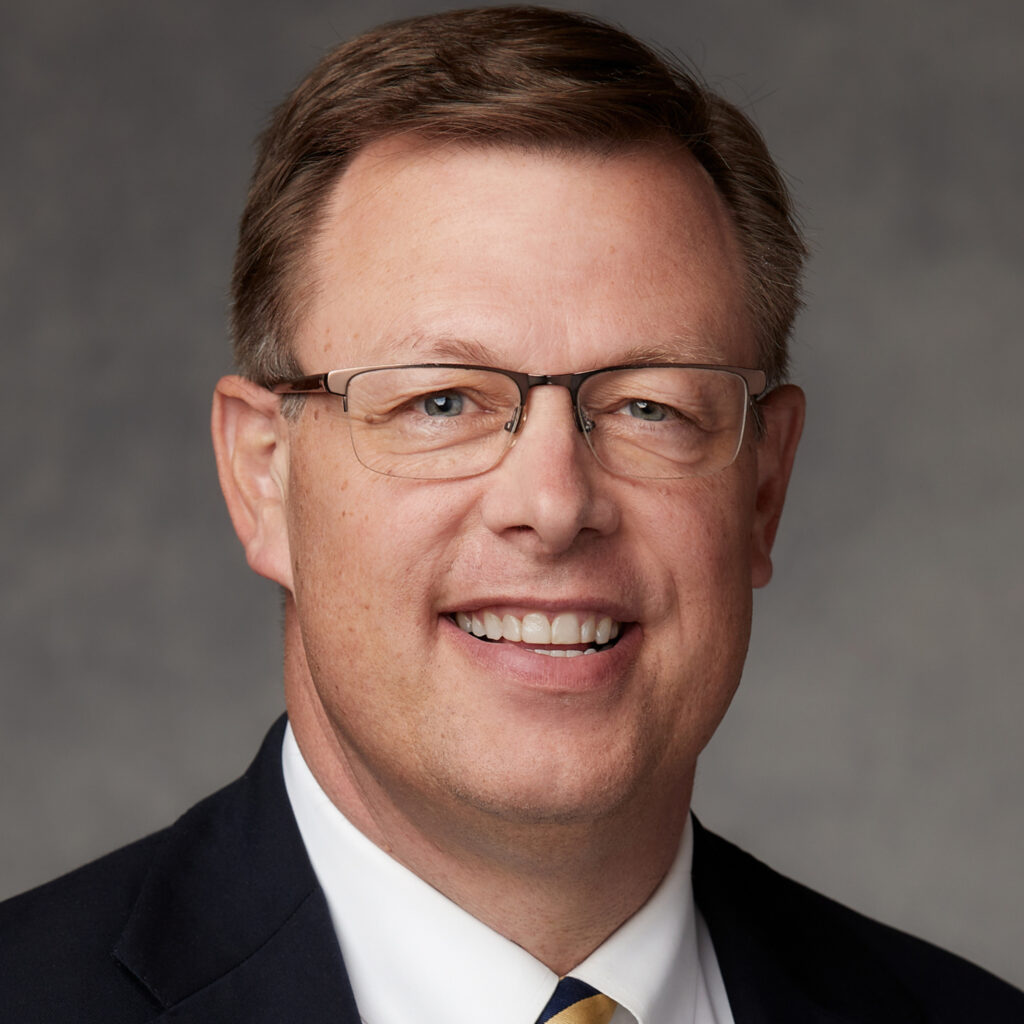
You can watch Elder Gilbert’s talk here.
From the Church website:
‘Elder Clark G. Gilbert was called to the Quorum of the Twelve Apostles on February 11, 2026. At the time of his call, he was serving as a General Authority Seventy and as the Commissioner of Church Education.
Prior to his assignment as the Commissioner of Education, Elder Gilbert was the inaugural president of BYU–Pathway Worldwide. He also served previously as the president of Brigham Young University–Idaho.
Elder Gilbert received a bachelor’s degree from Brigham Young University, a master’s degree from Stanford University, and a doctorate from Harvard University. He worked as a professor of entrepreneurial management at Harvard University. He was later the chief executive officer of the Deseret News and Deseret Digital Media.
Clark Gordon Gilbert was born in Oakland, California, on June 18, 1970. He served as a full-time missionary in the Japan Kobe Mission. He married Christine Calder in 1994. They are the parents of eight children.’
Brief summary of talk
Elder Gilbert’s talk centres on the Saviour’s loving invitation for all people to “come home” spiritually—no matter how far they may feel they have drifted.
Key quotes and questions to discuss or ponder
‘Today, I will specifically witness to the names of Redeemer and Repairer, as I focus on Christ’s invitation for all of us to come home.’ (Paragraph 3)
‘I witness that Christ is our Redeemer. When we fall short, He repairs the breaches in our lives.’ (Paragraph 32)
In what ways is Jesus Christ a ‘Repairer’?
‘Choices do have consequences, but we know in the gospel of Jesus Christ that when we lose our way spiritually, the Savior still allows us to change.’ (Paragraph 9)
How does the Saviour help us to change?
What are some of the ways in which people may feel that they don’t belong in the Church? (Paragraphs 14-21)
How do agency and accountability relate to the invitation to come home? (Paragraphs 14-22)
What can we learn from Sister Anglesey’s experience? (Paragraph 15)
What can we learn from the story of the Vargas family? (Paragraph 17)
What can we learn from the story of the Valdez family? (Paragraph 19)
What can we learn from John Raass’ experience? (Paragraph 21)
‘Helping others requires you to stay in your covenants.’ (Paragraph 22)
How can we help those who are close to us?
What do you take from the story in Paragraph 23?
‘Focusing on the hastening happening across the Church should not cause us to ignore those who struggle. (Footnote 18)
How can we reconcile the hastening with the fact that some in the Church struggle?
Invitations and application:
‘To this who are are trying to help those they love, hold onto the truth’ (Paragraph 22)
’To those who are struggling to come home, know that it is your Savior who’s the one calling you back. In the end, everyone must make their own choices to come home.’ (Paragraph 22)
‘Come home’ (Paragraph 32)
The heart of Elder Gilbert’s message is that coming home is always possible—and always worth it—but it requires a choice followed by small, faithful steps.
Additional Thoughts:
Elder Boyd K. Packer offered reassurance to parents who feel helpless in the face of influences beyond their control:
“It is not uncommon for responsible parents to lose one of their children, for a time, to influences over which they have no control. … It is my conviction that those wicked influences will one day be overruled. … When parents keep the covenants they have made at the altar, their children will be forever bound to them.” (General Conference, April 1992).
Elder Henry B Eyring:
“There is reason for us to have great optimism. It comes first from our testimony of the nature of our Heavenly Father: he loves our family members; He is their Heavenly Father as well as ours. It also comes from our testimony of the mission of Jesus Christ: he paid the price to redeem them. And it comes from the testimony of priesthood keys. Because of that, the power is on earth again to make covenants with God that seal families together, covenants which God honours. That is why we must not despair.” (A Legacy of Testimony, April 1996).
Sister Tamara W Runia said:
“It’s the Savior’s work to bring our loved ones back. It’s His work and His timing. It is our work to provide the hope and a heart they can come home to.” (General Conference, October 2023)
President J Reuben Clark of the First Presidency said:
“It is my hope and belief that the Lord never permits the light of faith wholly to be extinguished in any human heart, however faint the light glow may be. The Lord has provided that there shall still be there a spark which, with teaching, with the spirit of righteousness, with love, with tenderness, with example, with living the gospel, shall brighten and glow again however darkened the mind might have been.” (Conference Report, October 1936)
Elder M. Russell Ballard was asked: ‘If I have family or friends who are less active, how far do I go in my attempts to bring them back?’ He responded:
“My answer is please do not preach to them! Your family members or friends already know the Church’s teachings. They don’t need another lecture! What they need – what we all need – is love and understanding, not judging. Share your positive experiences of living the gospel. The most powerful thing you can do is share your spiritual experiences with family and friends. Also, be genuinely interested in their lives, their successes, and their challenges. Always be warm, gentle, loving and kind.” (BYU Speech, November 2017)
If this post has been helpful, please leave a ‘like’ or a comment. Thank you!

