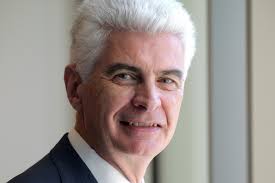
You can watch Elder Causse’s talk here.
Elder Caussé taught that God’s love operates on two powerful levels: it is universal (love all) and deeply personal (love each). He emphasized that every individual soul has infinite worth, even in a vast universe.
Through the Atonement of Jesus Christ, God’s love is extended to all people without exception, yet it is also applied individually—meeting each person’s unique needs.
Key Quotes and questions to ponder:
‘Christlike love grows and multiplies as it is shared. When we show others the pure love of Christ, they come to recognize more fully how deeply the Lord cares for them—and, in turn, their own capacity to love is enlarged and strengthened.’ (Paragraph 3)
How does Christlike live grow as it is shared?
Have you had an experience like the one Elder Causse describes in paragraphs 4-10?
‘This is the miracle of God’s relationship with us: The universe is vast beyond comprehension, yet every soul carries infinite worth in the eyes of our Creator.’ (Paragraph 10)
How might our interactions with others change if we truly saw every one as being of infinite worth?
‘I bear witness of this truth: God and His Son, Jesus Christ, love all—and They love each.’ (Paragraph 13)
‘To love all and to love each are not two different kinds of love but the same divine love expressed on two scales—one expansive enough to embrace the whole world and the other personal enough to notice a single individual with unique needs, circumstances, and life story.’ (Paragraph 18)
What does it mean to you that God loves both “all” and “each”?
‘All sons and daughters of God, without exception, will receive a full opportunity to access its supernal blessings. Yet it is a remarkably intimate gift, tailored to each individual’s needs and applied to one person at a time.’ (Paragraph 16)
How is the Atonement of Jesus Christ both universal and intimate?
‘Are we selective, or exclusive, in determining who deserves our love, or do we extend Christlike love to all with whom we associate?’ (Paragraph 20)
How can we learn to extend Christ-like love to all with whom we associate?
‘Service in the Church expands our circle of love and widens our associations.’ (Paragraph 24)
‘As we care for each soul, we help connect them to the Savior, inviting them to be healed and transformed through His atoning blood. In return, our own lives are blessed—we become more like the Savior and are filled with great joy.’ (Paragraph 34)
How has caring for or serving someone helped you feel joy and greater love for them?
‘As we enter the fold of Christ through sacred covenants, we are known, accounted for, and cared for—one person at a time.’ (Paragraph 28)
What lessons can we draw from the story of Beauty and the Beast? (Paragraphs 30-32)
Invitations and application:
‘‘We don’t serve only those we already love; rather, we come to love people as we serve them.’(Paragraph 24)
Do we interact superficially with others, or do we genuinely seek to know and care for each person?’ (Paragraph 26)
A simple challenge from Elder Caussé’s message might be:
Choose one person this week to “love each” more intentionally through a visit, message, act of service, or sincere conversation.
Additional thoughts:
‘Do not misunderstand or devalue how important you are to your Father in Heaven. You are not an accidental by-product of nature, a cosmic orphan, or the result of matter plus time plus chance. Where there is design, there is a designer.’ (Elder Alan T Phillips, October 2023)
‘Have you ever wondered what language we all spoke when we lived in the presence of God? I have strong suspicions that it was German, though I suppose no one knows for sure. But I do know that in our premortal life we learned firsthand, from the Father of our spirits, a universal language—one that has the power to overcome emotional, physical, and spiritual barriers.
That language is the pure love of Jesus Christ.
It is the most powerful language in the world.
The love of Christ is not a pretend love. It is not a greeting-card love. It is not the kind of love that is praised in popular music and movies.
This love brings about real change of character. It can penetrate hatred and dissolve envy. It can heal resentment and quench the fires of bitterness. It can work miracles.’ (Dieter F Uchtdorf, Young Women Conference, April 2013)
“We know … that even the most extreme acts of service fall short of the ultimate ‘profit’ unless they are motivated by the pure love of Christ. If our service is to be most efficacious, it must be unconcerned with self and heedless of personal advantage. It must be accomplished for the love of God and the love of his children.” (Dallin H Oaks, Pure in Heart [Salt Lake City: Bookcraft, 1988], 47.)
If this post has been helpful, please subscribe, leave a ‘like’ or comment. Thank you!

