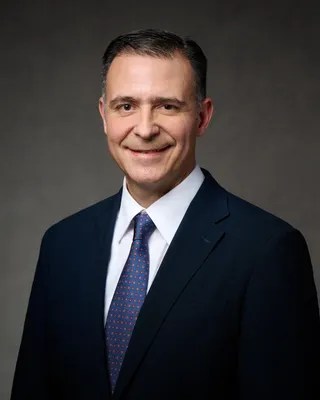
Biographical information from the Church website:
Elder Eduardo F. Ortega was sustained as a General Authority Seventy of The Church of Jesus Christ of Latter-day Saints at the April 2025 general conference. At the time of his call, he had been serving as a member of the Sixth Quorum of the Seventy in the Mexico Area. Elder Ortega has served in a number of Church callings, including full-time missionary in the Colombia Cali Mission, bishop, member of a stake presidency, and Area Seventy.
Elder Ortega received a bachelor of science degree in architecture from the John F. Kennedy University, Argentina in 2008 and a master of business administration degree in real estate business from the University of Belgrano in 2016. In 2017, he received a diploma in leadership from Harvard Business School. Elder Ortega worked as a construction project manager, first for SBS Co. and then for Village Roadshow Co. He became real estate director for American Express Company in 2014, board member for ArchRoyale Projects Limited in 2023, and board member for CoreNet Global in 2024.
Eduardo Fransico Ortega was born in Godoy Cruz, Argentina, on July 10, 1977. He married Gabriela Alejandra Cappi Franzia in 2002. They are the parents of three children.
Summary:
Elder Ortega teaches that true discipleship is not inherited automatically through family tradition or culture—it begins with a personal decision to follow Jesus Christ. Drawing on the example of his grandmother’s conversion in Argentina and his own experience gaining a testimony as a missionary, he explains that faith grows through small, daily spiritual experiences and faithful endurance on the covenant path. He emphasises that Jesus Christ refines, heals, and perfects His disciples over time as they rely wholly on Him.
Key quotes:
‘Some may think that faith is inherited. True discipleship, however, always begins with a personal decision.’ (Paragraph 1)
‘Our family heritage is a great blessing, but it is not a substitute for our diligent and intentional search for a personal testimony of the Lord Jesus Christ and the truths of His restored gospel.’ (Paragraph 3)
‘Our family legacy and traditions are very helpful, but in and of themselves they are not enough for us to build upon the rock of our Savior.’ (Paragraph 4)
‘Becoming a lifelong disciple of Christ is a process, the sum of multiple small, daily, personal and spiritual events.’ (Paragraph 16)
‘The path of discipleship often resembles climbing a mountain. The shortest path to the top is not always the most appropriate and often not the safest either. Thus, we must choose the firm and safe path, even if it is sometimes the longest and most demanding one. Jesus Christ and His restored gospel constitute that safe path that leads us to the true summit.’ (Paragraph 17)
‘I testify of the healing, refining, and perfecting power of Jesus Christ.’ (Paragraph 18)
Questions to discuss or ponder:
Why can a personal testimony not be inherited from family heritage or culture? (Paragraphs 1 and 3)
What can we learn from converts like Elder Ortega’s grandmother? (Paragraphs 7-8)
Have you seen the Lord’s hands and His gospel work in you to perfect and refine you? (Paragraphs 10 and 13)
‘How can we better help recent converts feel welcomed and supported?’ (Paragraph 11)
In what ways is Jesus Christ the author and finisher of our faith? (Paragraphs 14 and 18)
How does the path of discipleship resemble climbing a mountain? (Paragraph 17)
Invitations and application:
‘The invitation to seek, to come to know and to do, and then to endure on the covenant path is the same for all of us, regardless of whether the gospel has been in our families for generations or we were baptized just last week.’ (Paragraph 14)
Rather than relying mainly on family tradition, intentionally strengthen your own testimony through prayer, scripture study, worship, and obedience.
Additional Thoughts
‘My parents were born in the Philippines, but both of them had Chinese ancestry. Like almost everyone else in the Philippines, they embraced the predominant faith of my native country. So, our family enjoyed a healthy mix of different family, ethnic, and religious practices and traditions that influenced our daily lives.
When my parents joined the Church, little did they know that they were embracing yet another set of values and traditions—even the gospel culture, based on the plan of salvation, God’s commandments, and the words of living prophets. Over time, as our family strived to fully embrace the gospel, my parents discovered that some of our well-loved traditions were not consistent with gospel culture. It became apparent to them that they needed to make a choice.
And so began the difficult undertaking of weeding our family of traditions and cultural practices that were contrary to gospel culture. You could just imagine the immense pressure they received from family and friends to hold on to certain traditions even though they were contrary to the gospel.
I am so grateful that my parents exercised faith and chose to keep their covenants. It was a long and difficult process. Even when I left to live on my own, they were still working on it. Although our family was still not perfect, we had come a long way. This experience taught me that embracing gospel culture simply meant keeping our covenants.’ (Elder Michael John U Teh, General Conference, April 2026)
You can read the full talk at The Church of Jesus Christ of Latter-day Saints official site or watch it here.
If this post has been helpful, please subscribe or leave a ‘like’ or comment. Thank you!

