- ‘Isaiah referred to Jerusalem as “Ariel.” This name could mean “lion of God,” a symbol for the tribe of Judah. It might also mean “altar hearth.” Isaiah may have used this name to imply that God’s destruction of Jerusalem would turn the city into nothing more than a stone altar on which sacrifices have been burned.’ (Scripture Helps, Come Follow Me)
2. The people might keep that festival and offer many sacrifices, but this would not avail to ward off the tribulation which they deserved.
3. God regards the armies which he would employ as under his control, and speaks of them as if he would do it himself.
- ‘Isaiah prophesied that Jerusalem would be invaded and conquered and Jerusalem’s voice would no longer be a voice among the living. Instead, its inhabitants would “speak” or “whisper” out of their graves. The phrase “familiar spirit” comes from a Hebrew word that refers to a ghost or spirit of the deceased. By saying that Jerusalem’s voice would be as one with “a familiar spirit,” Isaiah may have been referring to a common ancient belief that the spirits of the dead could communicate with the living through faint sounds that could be understood by a spiritual medium.
The prophet Nephi likened Isaiah’s words to his own people, whose words would literally come forth out of the ground. He prophesied that after their destruction, the Nephites would speak “out of the ground” and “whisper out of the dust.” President Russell M. Nelson asked, “Could any words be more descriptive of the Book of Mormon, coming as it did ‘out of the ground’ to ‘whisper out of the dust’ to people of our day?”’ (Scripture Helps, Come Follow Me)
5. ‘The prophet Isaiah explains. In the twenty-ninth chapter of his book, he tells of an ancient record that would come out of the ground in the latter days, in a time preceding the restoration of Palestine as a fruitful field. (See Isa. 29:17 This record would be in the form of a book, he said, having to do with a people who had been destroyed suddenly.’ (Elder Mark E Petersen, October 1983)
- ‘Is there anything that has happened in this world to fulfill that like the coming forth of the Book of Mormon, the plates from which the Book of Mormon was translated that give the record of the early inhabitants of this land of America back over a period of thousands of years? Then he goes on in the sixth verse to say, “Thou shalt be visited of the Lord of hosts with thunder, and with earthquake, and great noise, with storm and tempest, and the flame of devouring fire.” Isa. 29:6
All you have to do is to read Third Nephi to see how literally that was fulfilled. I quote from Third Nephi, a portion, to indicate it:
“And it came to pass in the thirty and fourth year … there arose a great storm, such an one as never had been known in all the land.
“And there was also a great and terrible tempest; and there was terrible thunder, insomuch that it did shake the whole earth as if it was about to divide asunder.
“And there were exceeding sharp lightnings, such as never had been known in all the land.
“And the city of Zarahemla did take fire.
“And the city of Moroni did sink into the depths of the sea, and the inhabitants thereof were drowned.
“And the earth was carried up upon the city of Moronihah, that in the place of the city there became a great mountain.
“And there was a great and terrible destruction in the land southward.” 3 Ne. 8:5–11’ (Elder LeGrand Richards, April 1976)
7. This verse speaks of the enemies who would come against Jerusalem (represented by “Ariel”). The imagery is of a multitude of nations gathering to attack the city, but their efforts ultimately prove futile.
- The attacking nations are compared to a hungry person who dreams of eating but wakes still hungry, or a thirsty person who dreams of drinking but wakes still thirsty. Their expectations will not be fulfilled.
For Latter-day Saints, this passage can also be read as a reminder that the Lord is aware of opposition to His work and can preserve His purposes despite it. This becomes particularly interesting in the context of the wider chapter, which contains Isaiah’s prophecy concerning the Book of Mormon and the Restoration (Isaiah 29:11–14).
- This verse begins a powerful description of spiritual blindness and confusion. Isaiah tells the people to “stay yourselves, and wonder” and then describes them as being “drunken, but not with wine.”
The drunkenness here is metaphorical. The people have become spiritually confused and unable to perceive or understand what God is revealing to them. Their problem is not physical intoxication but a kind of spiritual insensitivity.
The verse therefore provides a warning: it is possible to be physically capable of seeing and hearing while being spiritually unable—or unwilling—to recognise truth. The imagery of drunkenness suggests a loss of clear judgment and perspective.
This connects closely with the following verses (Isaiah 29:10–12), where the Lord describes the people as having their eyes covered and being unable to understand the “vision.” In the broader context of the chapter, this spiritual blindness helps explain why God’s dealings with them are so difficult for them to comprehend.
For Latter-day Saints, the passage can be a useful reminder that revelation requires more than simply having access to truth; we must also be spiritually receptive and willing to act upon it.
- Isaiah 29:10 continues the theme of spiritual blindness introduced in verse 9. Isaiah says that the Lord has “poured out upon you the spirit of deep sleep” and that the prophets and seers have been covered.
The phrase “deep sleep” suggests a condition in which people are spiritually insensitive—they have the capacity to receive God’s word, but they are not perceiving or understanding it. The reference to prophets and seers being “covered” suggests that even those who should be able to see and teach God’s truth are, in this particular circumstance, unable to provide the people with the understanding they need.
Importantly, the passage is not necessarily saying that God arbitrarily prevents people from knowing truth. In the context of verses 9–13, Isaiah is describing a people who have become spiritually hardened. Their own attitudes and rejection of God have contributed to their inability to perceive spiritual things.
For Latter-day Saints, this verse provides an interesting principle: spiritual knowledge requires spiritual openness.Prophets can teach, scriptures can be available, and revelation can be given, but individuals still need humility, faith and a willingness to listen. Isaiah’s warning is therefore not simply about a lack of information—it is about the danger of becoming spiritually insensitive to truth.
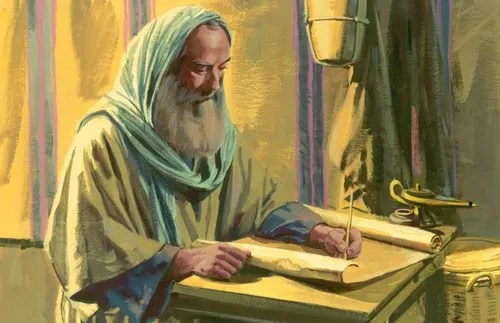
- ‘Anciently, official documents were often written on scrolls made of papyrus, which were rolled up and sealed. The seal was made from soft wax or clay, into which a ring or signet was pressed. One purpose of a seal was to prevent any unauthorized person from reading the document. Isaiah likely used the imagery of a sealed scroll to illustrate how his revelations were incomprehensible to the people of Judah because of their spiritual blindness.
Another significant fulfillment of Isaiah’s prophecy occurred in our dispensation. In February 1828, Martin Harris traveled to New York City with a transcription of some characters from the Book of Mormon plates. He intended to show them to experts in ancient languages. One scholar he spoke with was Charles Anthon, a professor of Latin and Greek. After examining the characters, Professor Anthon gave Martin a certificate verifying their authenticity.
However, after learning that the plates had been delivered to Joseph Smith by an angel, Professor Anthon tore the certificate into pieces. He told Martin that if Joseph wanted the plates translated, he should bring them to New York City and let a scholar translate them. When Martin explained that a portion of the plates were sealed and that Joseph was not allowed to show them to anyone, Professor Anthon replied, “I cannot read a sealed book.” Martin and Joseph later spoke of the visit to Anthon as a fulfillment of Isaiah’s prophecy.’ (Scripture Helps, Come Follow Me)
12.’The origin of this book was to be unusual for various reasons, but one was that it would involve both an unlearned man and a scholar [see Isa. 29:11–12 Joseph Smith was that unlearned man, at that time in his life. So remarkable would be the effect of the book’s publication that even the deaf would hear the words of the book, the blind would see, and the poor among men would rejoice in the Holy One of Israel. [See Isa. 29:18–19]’ (Elder Mark E Petersen, October 1977)
13. ‘Whatever takes precedence over worship of the Father and the Son becomes an idol. Those who reject God as the source of truth, or disavow any accountability to Him, in effect substitute themselves as their god. One who places loyalty to a party or cause ahead of divine direction worships a false god. Even those who purport to worship God but do not keep His commandments are walking in their own way: “They draw near to me with their lips, but their hearts are far from me.” (Elder D Todd Christofferson, April 2025)
14. ‘The latter-day fulfillment of Isaiah’s prophecy includes the Restoration of the gospel of Jesus Christ and the coming forth of the Book of Mormon. Elder Ronald A. Rasband taught: “Ancient prophets of God, when moved upon by the Holy Ghost, prophesied of the Restoration and what was to come in our day, the last dispensation and the fulness of times. The very work ‘fired the souls’ of the early seers [Teachings of Presidents of the Church: Joseph Smith (2007), 515]. Through generations of time, they foretold, dreamed, envisioned, and prophesied of the future of God’s kingdom on earth, what Isaiah called ‘a marvellous work and a wonder’ [Isaiah 29:14].”
Toward the end of her life, Emma Smith, who briefly served as scribe for Joseph as he translated the Book of Mormon, shared how the coming forth of the Book of Mormon was a marvelous work and a wonder:
“[Joseph] had neither manuscript nor book to read from [as he was translating]. …
“If he had had anything of the kind he could not have concealed it from me. …
“Joseph Smith … could neither write nor dictate a coherent and well-worded letter; let alone dictating a book like the Book of Mormon. And, though I was an active participant in the scenes that transpired, … it is marvelous to me, ‘a marvel and a wonder,’ as much so as to any one else. …
“My belief is that the Book of Mormon is of divine authenticity—I have not the slightest doubt of it. I am satisfied that no man could have dictated the writing of the manuscripts unless he was inspired; for, when acting as his scribe, [Joseph] would dictate to me hour after hour; and when returning after meals, or after interruptions, he would at once begin where he had left off, without either seeing the manuscript or having any portion of it read to him. This was a usual thing for him to do. It would have been improbable that a learned man could do this; and, for one so ignorant and unlearned as he was, it was simply impossible.”’ (Scripture Helps, Come Follow Me)
- ‘The Egyptian party at court had done their utmost to conceal their project from Isaiah; this attempt to deceive God’s prophet is an act of rebellion, an attempt to steal a march on Jehovah.’ (Cambridge Bible for Schools and Colleges)
- This verse uses the striking image of the potter and the clay:
“Surely your turning of things upside down shall be esteemed as the potter’s clay…”
Isaiah is challenging people who have begun to think that they can question, reshape, or disregard God’s purposes according to their own understanding. The basic point is that the created thing cannot sensibly claim authority over its Creator.
The imagery also highlights a reversal of perspective. The clay might say, “He made me not,” or suggest that the potter does not really understand what he is doing. Isaiah exposes the absurdity of such reasoning: the potter knows the purpose of the clay because he is the one who formed it.
For Latter-day Saints, the verse can be seen as a reminder of humility before God. We may not always understand why the Lord acts or commands something in a particular way, but our limited perspective does not give us a better understanding than God’s. The challenge is to remain teachable and trust that the Creator sees purposes and possibilities that we cannot yet see.
There is also an encouraging side to the metaphor: clay is capable of being shaped. The Lord’s desire is not merely to control His children but to form and refine them into something better than they could become on their own.
17. ‘Lebanon, a barren mountain, a desolate wilderness, here stands for the Gentile world.’ (Benson Commentary
- In the immediate context, Isaiah is describing a future time when the spiritual blindness and deafness of the people will be reversed. Those who previously could not understand God’s word will be able to hear, see and comprehend it.
For Latter-day Saints, this verse has particular significance because it can be understood alongside Isaiah 29:11–14, which describes a sealed book and a remarkable work that God would bring forth. The Restoration and the Book of Mormon provide a natural Latter-day Saint application of these verses. The Book of Mormon itself quotes Isaiah 29 and connects Isaiah’s prophecy with the coming forth of the book.
There is also a broader spiritual message. Isaiah’s language of deafness and blindness is deliberately contrasted with verse 10. Where people had previously been unable to perceive God’s word, the Lord promises a time when they will be able to understand it.
Thus, Isaiah 29:18 can be seen as a message of hope and restoration: spiritual blindness need not be permanent. God can open our eyes and ears so that we can recognise and understand His word. - The Lord promises his choicest blessings, not to the rich and mighty, but to the poor and meek.
- Isaiah describes a time when those who oppose righteousness, mock God, or deliberately seek opportunities to do wrong will no longer have power to prevail.
The “scorner” represents those who treat sacred things with contempt or ridicule. “Those that watch for iniquity” suggests people who deliberately look for opportunities to exploit, accuse or do evil.
The important contrast is between verse 20 and the earlier spiritual blindness in the chapter. As God restores light and understanding, the influences that promote wickedness lose their power.
For Latter-day Saints, the verse can be read as a reminder that God’s ultimate purpose is to establish righteousness and remove the forces that oppose it. It also encourages us not to become discouraged when wickedness or opposition appears to prosper temporarily. Isaiah’s message is that such opposition is not permanent; God’s purposes will ultimately prevail. - The verse describes people who “make a man an offender for a word,” who lay traps for those who seek to live righteously, and who use dishonest means to turn people away from what is right.
The verse highlights several forms of injustice: misrepresenting someone’s words, falsely accusing them, and exploiting technicalities or deception to condemn an innocent person. The problem is not simply disagreement; it is the deliberate misuse of judgment and language.
In the context of Isaiah 29, this contrasts sharply with the Lord’s promise to restore truth, understanding and righteousness. Human beings may distort words and manipulate judgment, but God sees the truth.
For Latter-day Saints, the verse offers a useful reminder to judge carefully and charitably. We should avoid taking someone’s words out of context or looking for reasons to condemn them. It also encourages us to be honest in our own speech, recognising that words can either clarify truth or be deliberately used to deceive.
There is a reassuring message here as well: God is not deceived by distorted accusations or dishonest judgments. He knows the intentions of the heart and ultimately brings truth to light. - After describing wickedness and injustice in the preceding verses, Isaiah says that “Jacob shall not now be ashamed, neither shall his face now wax pale.”
The name “Jacob” refers to the covenant people of Israel. Their shame and fear had resulted from their rebellion and the consequences that followed. But Isaiah now points toward a time when that condition will change.
- Jacob will “sanctify my name” and will “fear the God of Israel.” In other words, restoration comes as the people turn back to God and recognise Him properly.
For Latter-day Saints, this verse fits well with the broader theme of Isaiah 29: God does not abandon His covenant people despite their periods of spiritual blindness and disobedience. He promises restoration, renewed understanding and a return to righteousness.
There is also a personal message of hope: past failure does not have to define our future. Through repentance and a renewed relationship with God, shame can be replaced by confidence, and spiritual confusion by understanding. - ‘The only cure for the doctrinal illiteracy of those who murmur will be to learn doctrine.’ (Elder Neal A Maxwell, April 1986)

