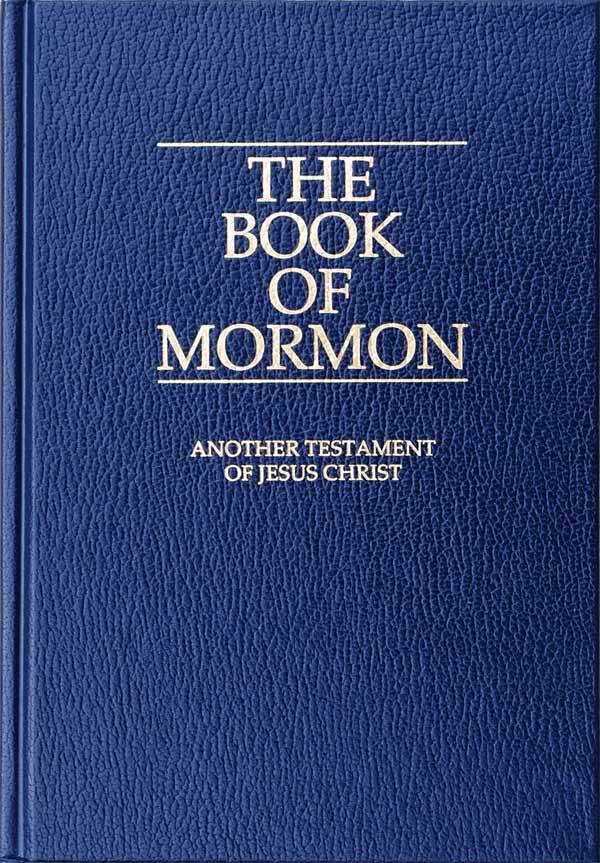
On a cold February morning in 1910, as Italian Protestant minister Vincenzo di Francesca walked along Broadway in New York City, a strong gust of wind caught the pages of a book lying on top of a barrel filled with ashes. The shape of the binding suggested it was a religious book, and curiosity drew him closer.
He picked it up, brushed away the ashes, and noticed that it was printed in English. The title page and cover had been torn away, so there was nothing to identify it.
As the wind turned the pages, unfamiliar names caught his eye: Alma, Mosiah, Mormon, Moroni, Lamanites—along with the familiar name of Isaiah. He wrapped the mysterious book in newspaper and took it home.
There, he began to read.
As he studied the torn pages, especially the writings of Isaiah, he became convinced that this was a sacred record. He read the remaining pages once, then twice, and then yet again. Gradually he came to believe that this unknown volume was another testament of the Redeemer.
That evening he locked the door of his room, knelt with the book in his hands, and read Moroni chapter 10. He prayed to God, in the name of Jesus Christ, asking whether the book was truly from Him and whether he should incorporate its teachings into his preaching.
His answer came unmistakably.
Later he wrote that his heart “began to palpitate,” and he was filled with a joy beyond the power of human language to describe. He knew God had answered his prayer and that the book was true.
Although he still had no idea what the book was called or which church had published it, he began quoting from it in his sermons. His congregation loved the messages so much that many became dissatisfied with the sermons of the other ministers.
His fellow clergy did not share their enthusiasm.
On Christmas Eve 1910, after preaching about the birth and mission of Jesus Christ using teachings from the mysterious book, he was publicly contradicted by his colleagues. Soon afterwards he was summoned before the governing council of his church.
They demanded that he burn the book, insisting it was of the devil.
His response was courageous:
“I will not burn the book because of the fear of God. I have asked Him if it were true, and my prayer was answered affirmatively and absolutely.”
He was summoned a second time and again ordered to destroy it. Again he refused, declaring that he looked forward to the day when he would discover the church to which the book belonged so that he could become part of it.
Instead, he was stripped of his ministry.
During the First World War he served in the Italian Army. On one occasion he told fellow soldiers the story of the people of Ammon, who buried their weapons rather than shed blood. His military chaplain reported him, and he was punished with ten days on bread and water and ordered never again to speak about the book.
After the war he returned to New York and was eventually readmitted to his former church as a lay member. Later he travelled to Australia with another minister. There he again spoke about the teachings he had learned from the mysterious book, including Christ’s visit to the people in the Americas. Once again he was expelled from his church.
Still he did not know the book’s name.
Then, in May 1930, while consulting a French dictionary, his eye fell upon a single word:
Mormon.
Reading further, he discovered that a church by that name had been organised in 1830 and operated a university in Provo, Utah. He immediately wrote to the university president asking about the book with the missing pages.
His letter was forwarded to President Heber J. Grant, who replied personally and sent him a copy of the Book of Mormon in Italian. Elder John A. Widtsoe also wrote, enclosing a pamphlet explaining the mission of the Prophet Joseph Smith and the coming forth of the Book of Mormon.
At last, after twenty years, Vincenzo knew the identity of the book that had changed his life.
World events delayed his hopes still further, but on 18 January 1951, more than forty years after finding the torn book, he was finally baptised in Sicily—the first baptism performed there.
As he emerged from the water he simply said:
“I have prayed daily for many years for this moment.”
Five years later, on 28 April 1956, he entered the temple in Bern, Switzerland, and received his endowment.
What an extraordinary testimony of the power of the Book of Mormon.
There is something remarkable about this sacred book. It quietly but powerfully bears witness of Jesus Christ to those who read it with sincere hearts.
Parley P. Pratt described his own experience in these words:
“The Spirit of the Lord came upon me, while I read [the Book of Mormon], and enlightened my mind, convinced my judgment, and riveted the truth upon my understanding, so that I knew that the book was true, just as well as a man knows the daylight from the dark night.” (Journal of Discourses, 5:194.)
Vincenzo’s experience is unique because he gained a testimony before he even knew the name of the book or where it had come from. Yet his experience illustrates a principle that has been repeated millions of times. Countless people have accepted Moroni’s invitation to ask God if the Book of Mormon is true, and they too have received a witness through the Holy Ghost.
The Book of Mormon has power.
The question for each of us is this: Do we truly appreciate that power?
The Lord once rebuked the early members of the Church because they had not treasured the Book of Mormon as they should:
“And your minds in times past have been darkened because … you have treated lightly the things which you have received…
“…And this condemnation resteth upon the children of Zion, even all.
“And they shall remain under this condemnation until they repent and remember the new covenant, even the Book of Mormon, not only to say, but to do according to that which I have written.” (Doctrine and Covenants 84:54–57.)
That is a sobering warning.
May we never treat lightly this remarkable gift from God. May we read it consistently, study it prayerfully, treasure its teachings, and live by its counsel. As we do, like Vincenzo di Francesca and millions of others, we will discover for ourselves the quiet but life-changing power of the Book of Mormon.

